
Author: Gani Nasirov | www.ganinasirov.com
Boom Town and Features of Modernity
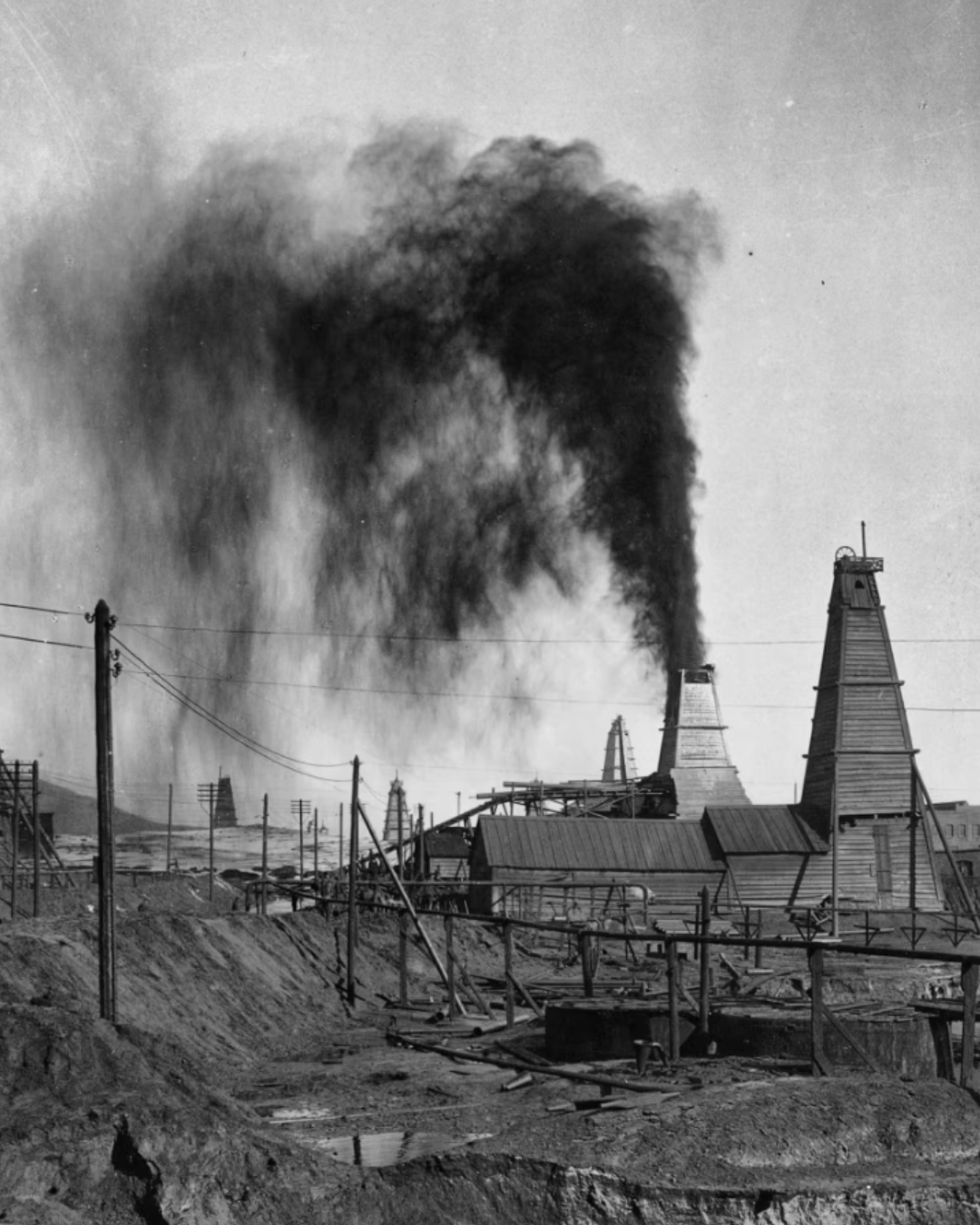
The historic core of Baku, which is known as Icherisheher or inner city, has been developed in accordance with the medieval Middle Eastern and Islamic urban planning principles. The planning follows a non-grid system of mahallas (neighbourhoods) centered around a central bazaar (market) square and main mosque, and supporting amenities such as hammam (bath house), caravanserais (inns), administrative premise, and dwelling houses. However, the late XIX century saw the development of the modern oil industry, industrialization, mechanization of day-to-day life for people, and urbanization. All of this has transformed Baku into an Oil metropolis.
The industrial development led Baku to become one of the centres of global oil production in 1901; a railway was built connecting Baku to the open seas via the Black Sea in 1883, and the longest oil pipeline (Baku-Batumi) of its time in 1907; the first oil tanker, Zoroaster (1878) to transport oil worldwide; Alexandre Michon filmed the oil gush fire as one of the earliest movies in 1898; or the construction of grand and magnificent Alexander Nevsky Cathedral in 1898. All these had a massive impact on society and urban habitat.
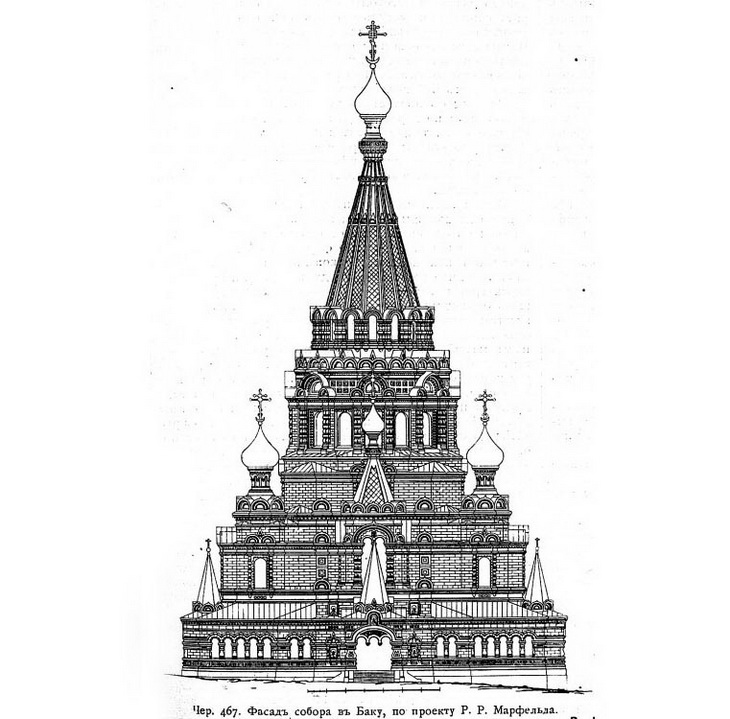
Architect: Robert Marfeld. Construction supervisor: Józef Gosławski. Constructed: 1888-1898.
Photo credit: http://www.pravoslavie.az
European industrialists, such as the Rothschild Family, the Nobel Brothers, the Shell Trading and Transport Co, and the Royal Dutch Oil Company revolutionized the oil industry. Mechanization and urbanization of the society were accelerated, the consumers gained more power, demand for choices increased and the oil trade became truly international.
The transformative forces of the oil industry, urbanization, and the diverse array of people who flocked to the region in search of opportunities turned Baku into a dynamic and evolving city.


If you would like to discover how oil transformed Baku into one of the world’s great boomtowns, join my
This guided walk explores the legacy of the oil boom through downtown Baku’s architectural and cultural landmarks, from the mansions of the oil barons to the influence of the Nobel family, as well as the city’s Soviet and modern oil history.
The population rose from about 7 thousand to 214 thousand in 1913. Baku became a cosmopolitan city with diverse groups of people and among them were Tatars (Azerbaijanis), Russians, Armenians, Jews, Poles and Germans. The oil industry also attracted a large number of laborers and professionals to Baku. This influx of people, ultimately, significantly altered the social and economic fabric of the city.
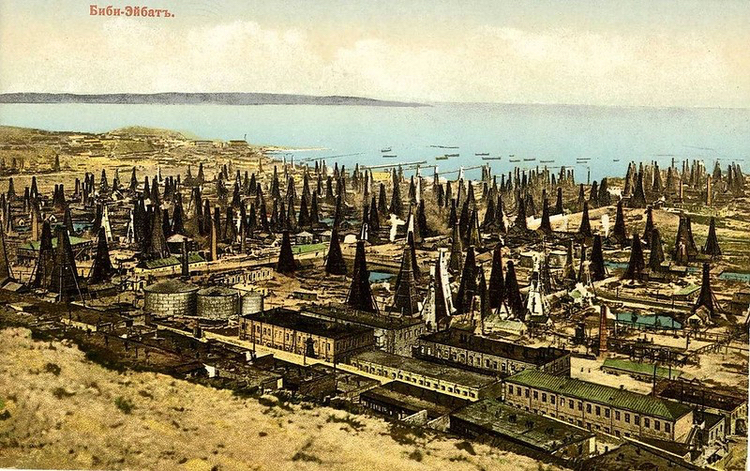
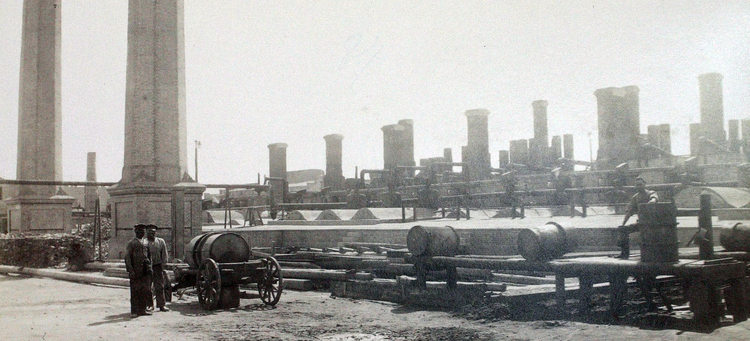
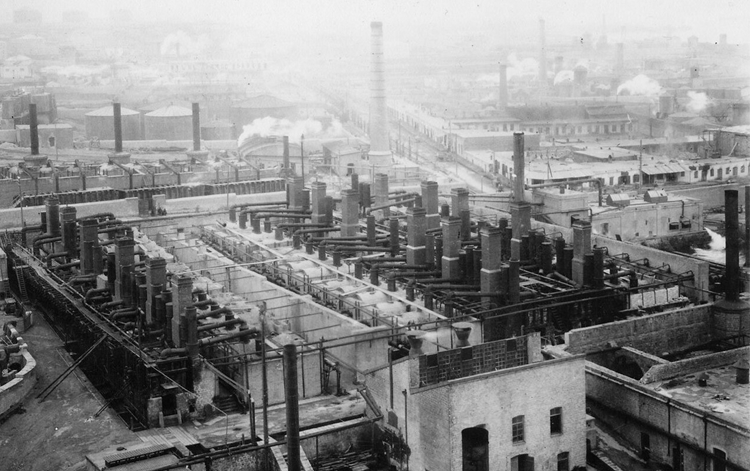
As a result of these developments, Baku was transformed from a medieval and oriental fortress town (citadel) to a picturesquely European city with a modern lifestyle in an environment built based on principles of European urban planning.
Brief Survey of Art-Nouveau Architecture

Art-Nouveau was a deliberate reaction to neo-classicism or the imitation of historicism that dominated much of 19th-century art and design in Europe. A new generation of architects attempted in creation of a true new style or Architecture. The new style was labelled as L’Art Moderne in Belguim; L’Art Nouveau in France; Jugendstil in Germany; Sezessionstil in Austria, and Modernismo (or Modernista) in Spain. Defying the confines of traditions, the Art-Nouveau architecture was widely practiced in Europe from the 1890s to the 1910s.
Its guiding principles were a harmonious blend of natural inspiration for shape and form such as foliage, sinuous curves, whiplashing vines, and blooming flowers and their structural integration into design project of building. The ornamentation flowed seamlessly with exterior façade, interior and furniture, blurring the lines between art and architecture, and all forming integral part of the building’s structure.
The Art-Nouveau movement evolved in two radically different ways: Curvilinear with organic forms which was specific to architecture in France, Spain and Italy; and Rectilinear with geometric and abstract forms which was adopted in Germany, Austria and Scandinavia and Scotland.
See the comparison of curvilinear (right) and rectilinear (left) Art-Nouveau below.
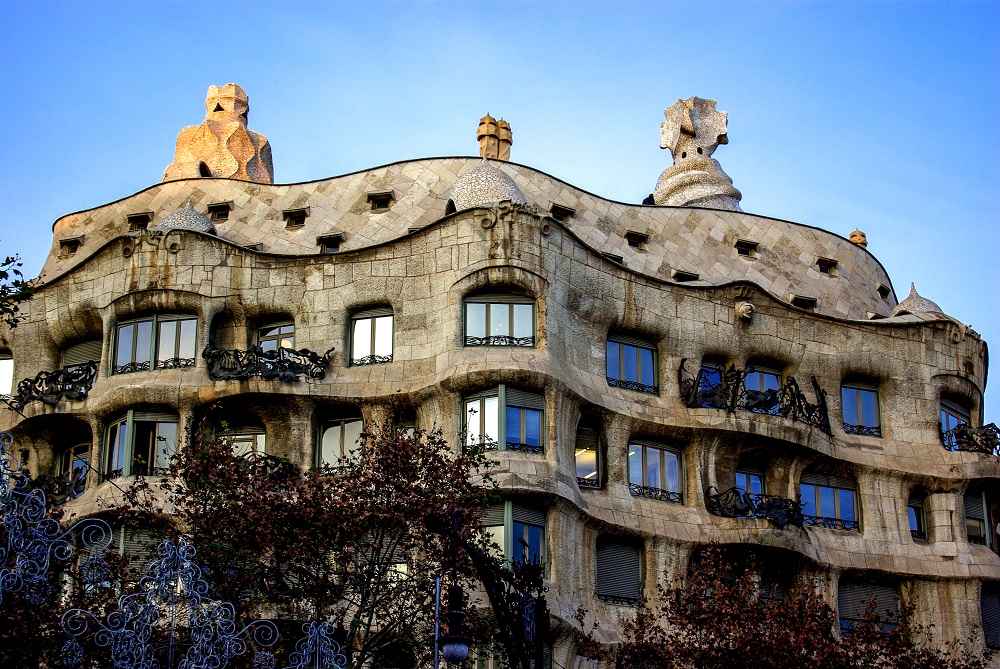
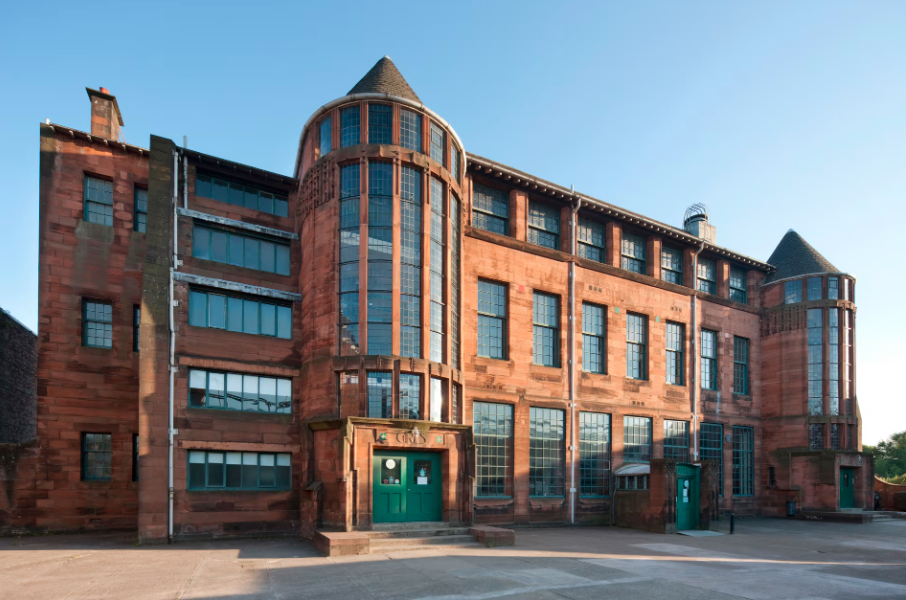
Moreover, Art Nouveau embraced the possibilities of new materials like glass, iron, and concrete, allowing for daring forms and playful experimentation. Glass-and-steel structures let light dance through interiors, while sinuous ironwork wove itself into intricate balconies and railings. With all these came imaginative creation by craftsmanship in which every detail was meticulously crafted, showcasing the virtuosity of artisans.
Ultimately the architects of the late 19th century deliberately rejected what came from the past in order to accomplish the integration of the design with mechanization of industrially developing societies and consequently to translate all these into a modern architecture.
Art-Nouveau Mascarons in Baku
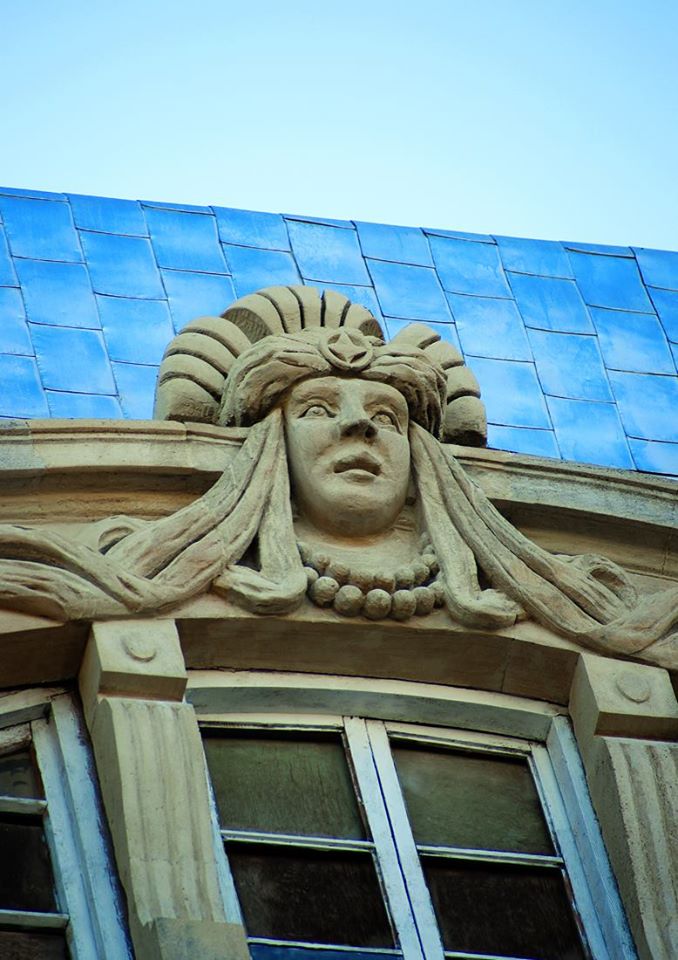

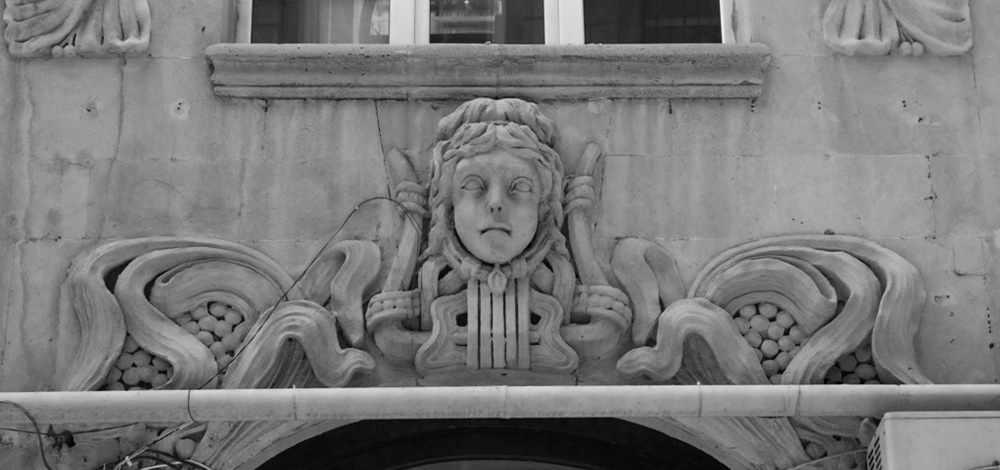


While relatively short-lived as a formal movement, it had a profound impact on subsequent architectural and design styles. Its emphasis on organic forms, innovative use of materials, and integration of the arts laid the groundwork for the development of 20th-century modernism.
The Origins of Art-Nouveau Architecture in Baku
The architecture of Baku in the late XIX and the early XX centuries is labelled as eclectic, a mixture of all the different styles. The built environment was organized with the principles of neo-classicism. Shamil Fatullayev, the great researcher of urban planning and architecture in Baku, specifies it as Italian Renaissance in particular.
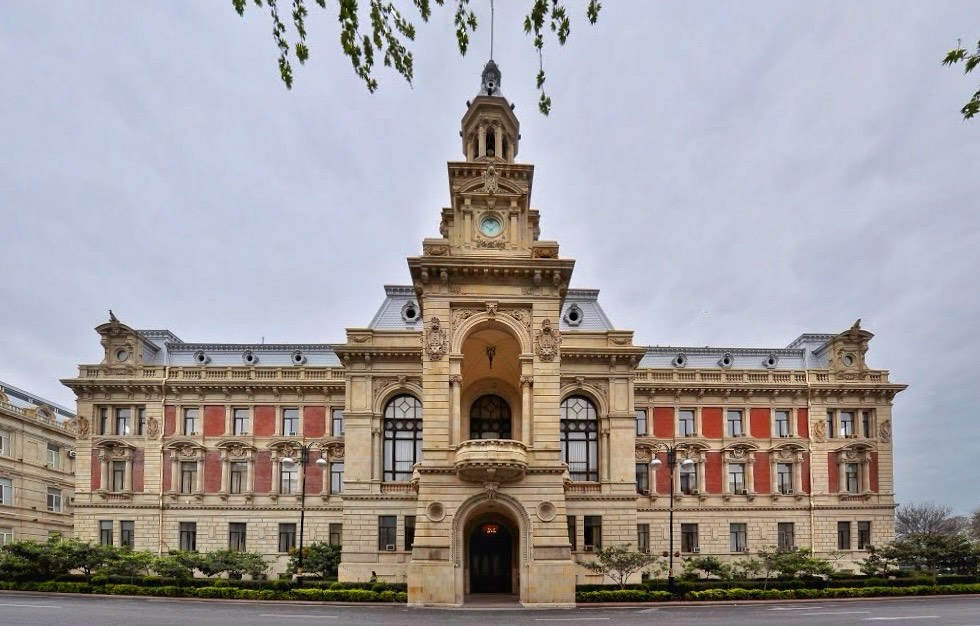
The greatest monumental landmark of the neo-classical [Baroque] architecture was Baku’s Town Hall, a project designed by the polish architect, Józef Gosławski.
Józef Gosławski and many other architects were the graduates of arts and design schools in Saint Petersburg, the Capital of Imperial Russia, when they arrived in Baku in 1890s. Thus, the architects of European origin, Poles, Germans, Armenian, Azerbaijani and Russians brought various architectural influences, including Art-Nouveau, from the imperial centres. These young aspiring architects had put their talent into work.
Equally important, it is worthy to note that the advances in architectural education at schools i.e. the Academy of Arts and the Institute of Civil Engineering in Petersburg…owed much to comparable institutions in Berlin and Paris. Consequently, Nikolaus von der Nonne, Russian engineer of an ethnic German, served as the mayor of Baku during 1898-1901. He, then, drew Baku’s General Master Plan in 1898 to layout the foundation of the city’s expansion beyond the XII century fortress walls.
Shamil Fatullayev draws parallels with Saint Petersburg by arguing that the expansion of Baku followed the path Saint Petersburg has underwent architecturally. Hence, Baku breaks its traditional arrangement of the Islamic urban planning with the European principles of development.
Moreover, riches of Baku’s Oil Barons for personal glory and fame provided finances to construct many real estates (profitable houses) designed in Art-Nouveau style. The oil barons raced a competition of the ownership of the most extravagant and grandeur mansions. Furthermore, the innovation and technological development enabled the architects to help the Oil Barons (see some the influential Oil Barons of Baku below) to achieve it.
Oil Barons of Baku


It was thanks to the customers [the Oil Barons] that buildings of completely new types and functions appeared in Baku, e.g. public assembly clubs, educational institutions, industrial enterprises, banks, dwelling houses, etc. The difference in tastes and financial capacity of customers manifested itself through various versions of Art Nouveau.

Azerbaijani scholars have defined the Art-Nouveau movement in Baku as ‘modern’ architecture of its era in the literature (Elchin Aliyev, Shamil Fatullayev, p. 394). It was not seen as a reaction against the use of classical architecture specifically, as Baku has never had history of evolving classical architecture of Europe previously. For Baku both neo-classicism and Art-Nouveau architecture were embodiment of modernity.
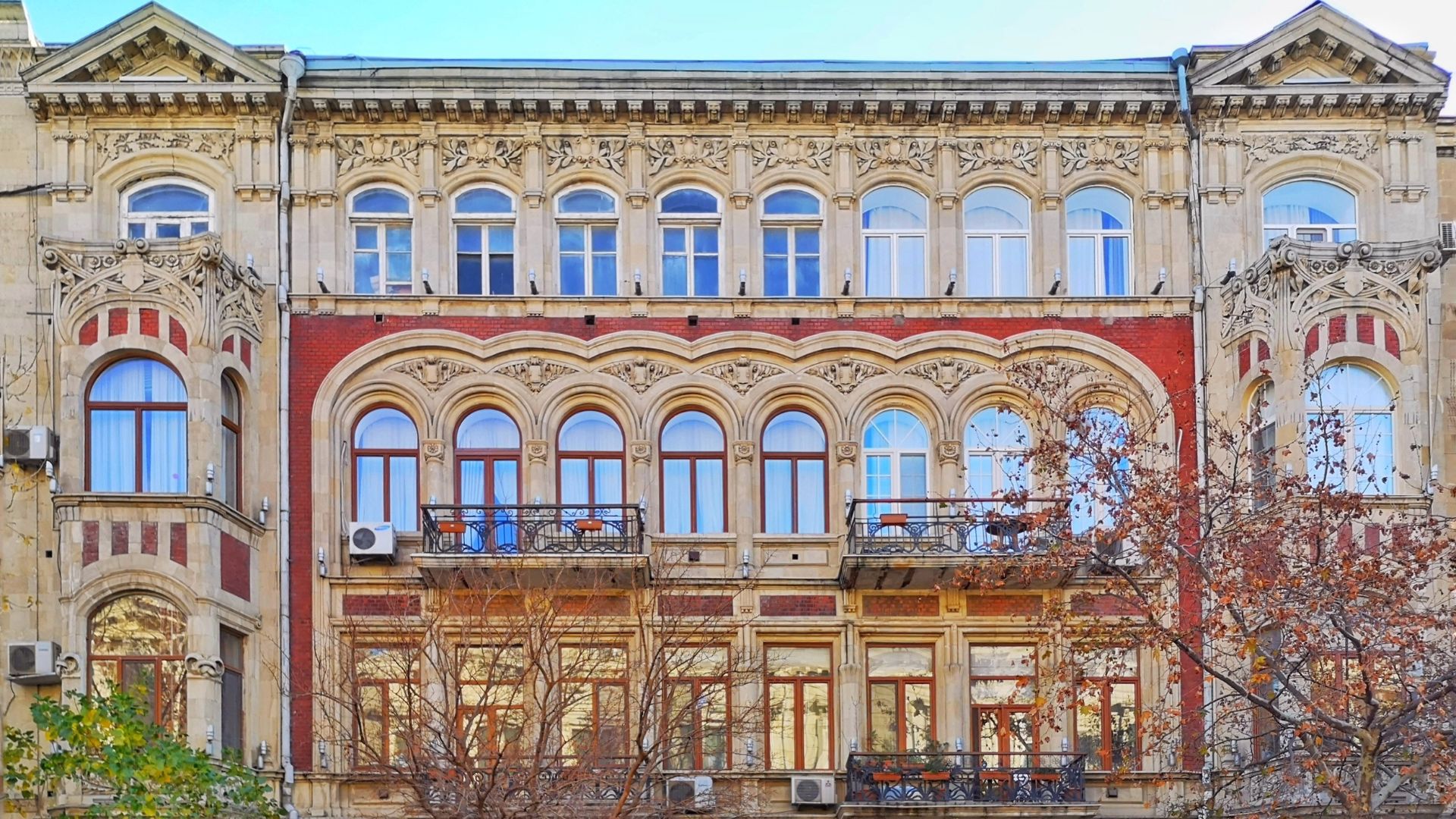
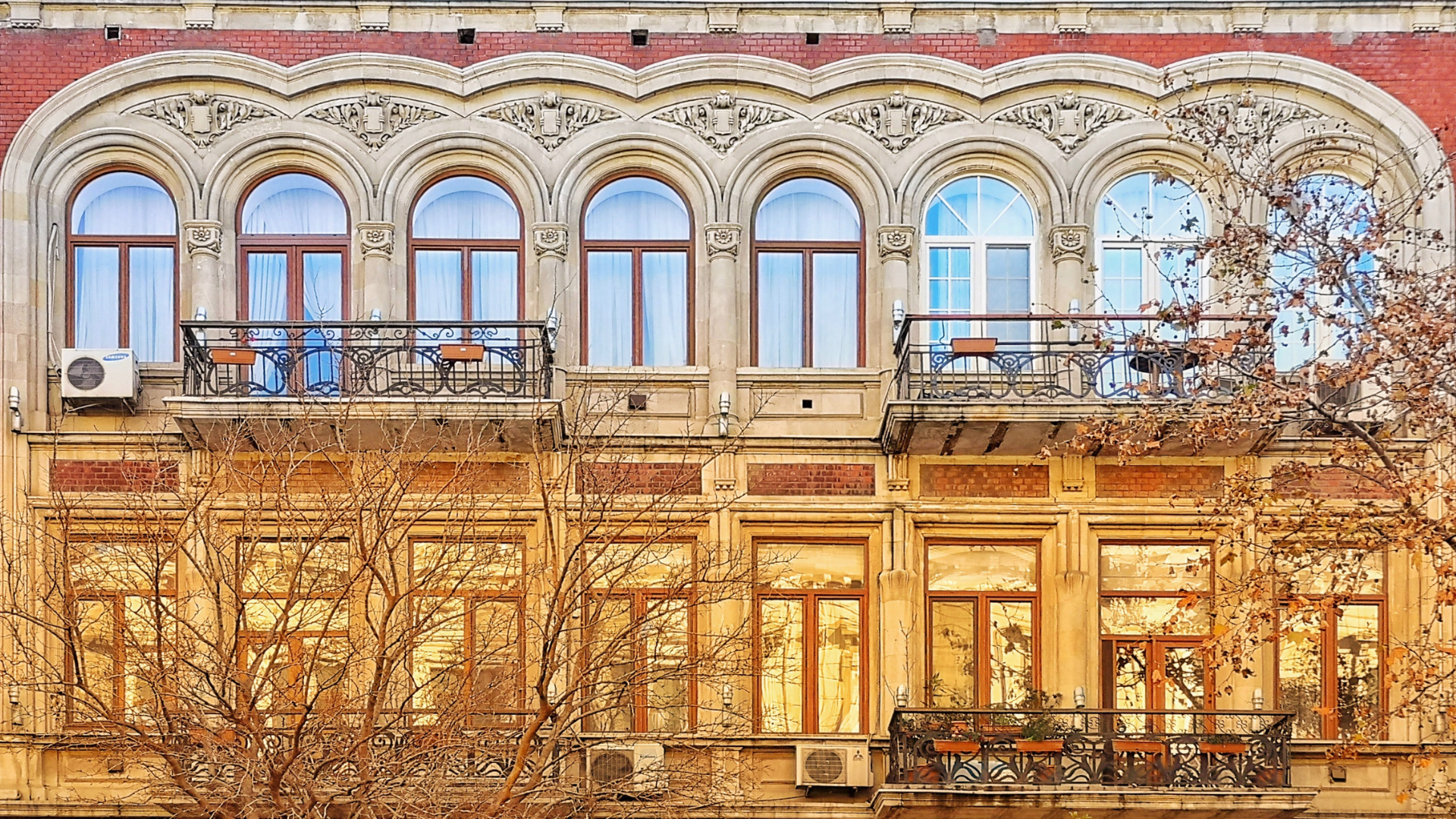
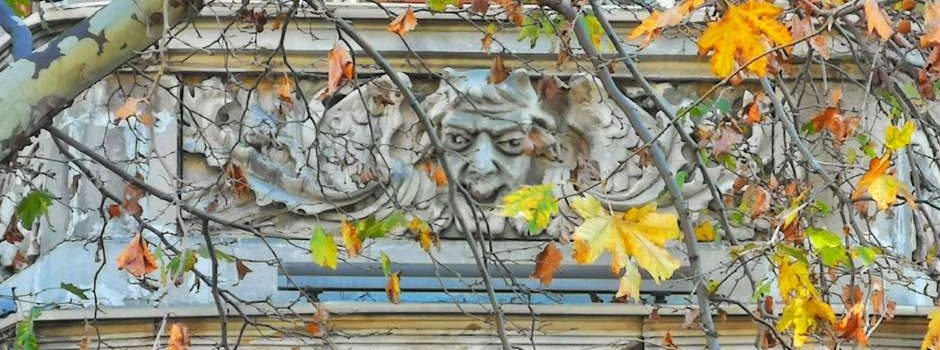
Shamil Fatullayev asserts that injecting energy and creativity into Baku’s architectural scene, modern [Art-Nouveau] buildings stand apart with their ground-breaking compositional techniques, reimagined building forms, and exuberant decorations that shake the monotony of eclectic styles. However, while these modern constructions celebrate a freshness of artistic expression in exterior, their layouts often echo the traditional spatial planning of their 19th-century predecessors, whispering a tale of continuity amidst change.
Architects of Baku


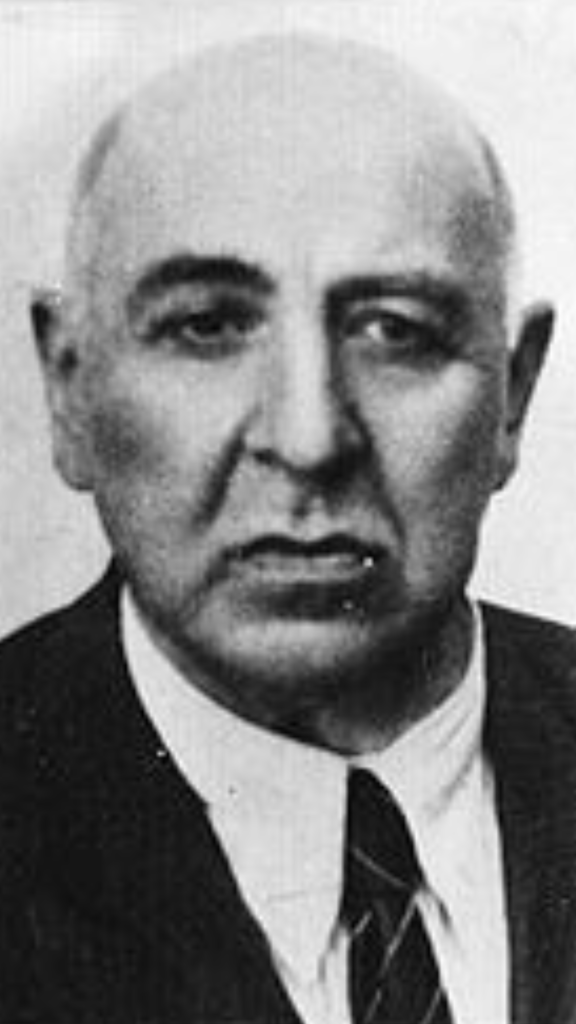
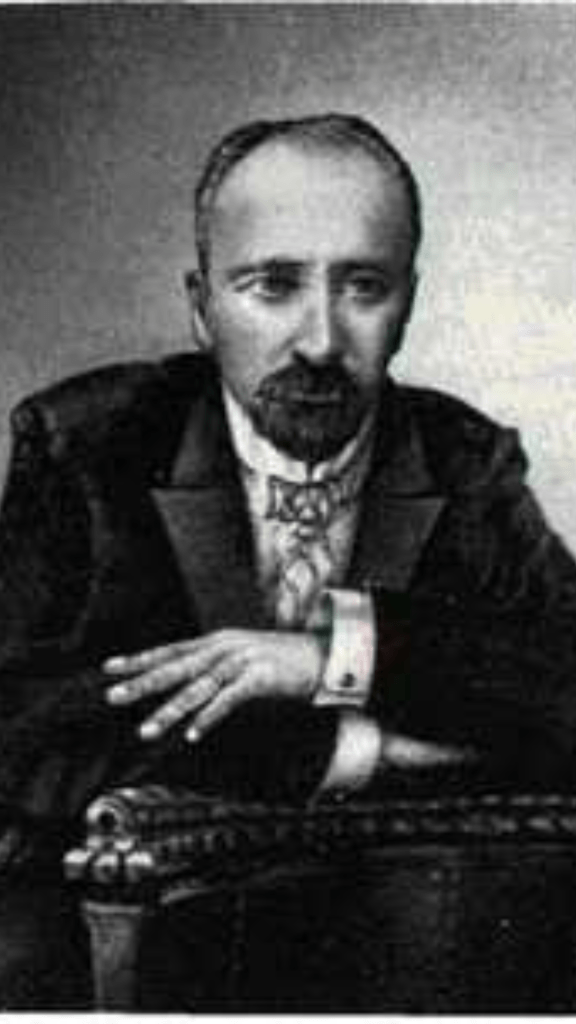
Ultimately, the emergence of Art-Nouveau architecture in Baku is an intriguing story of confluence and transformation, shaped by several key factors: a) Oil Boom and new wealth; b) Industrial and technological development c) European influences and architects; and d) transformation of urban habitat and human geography in Baku.

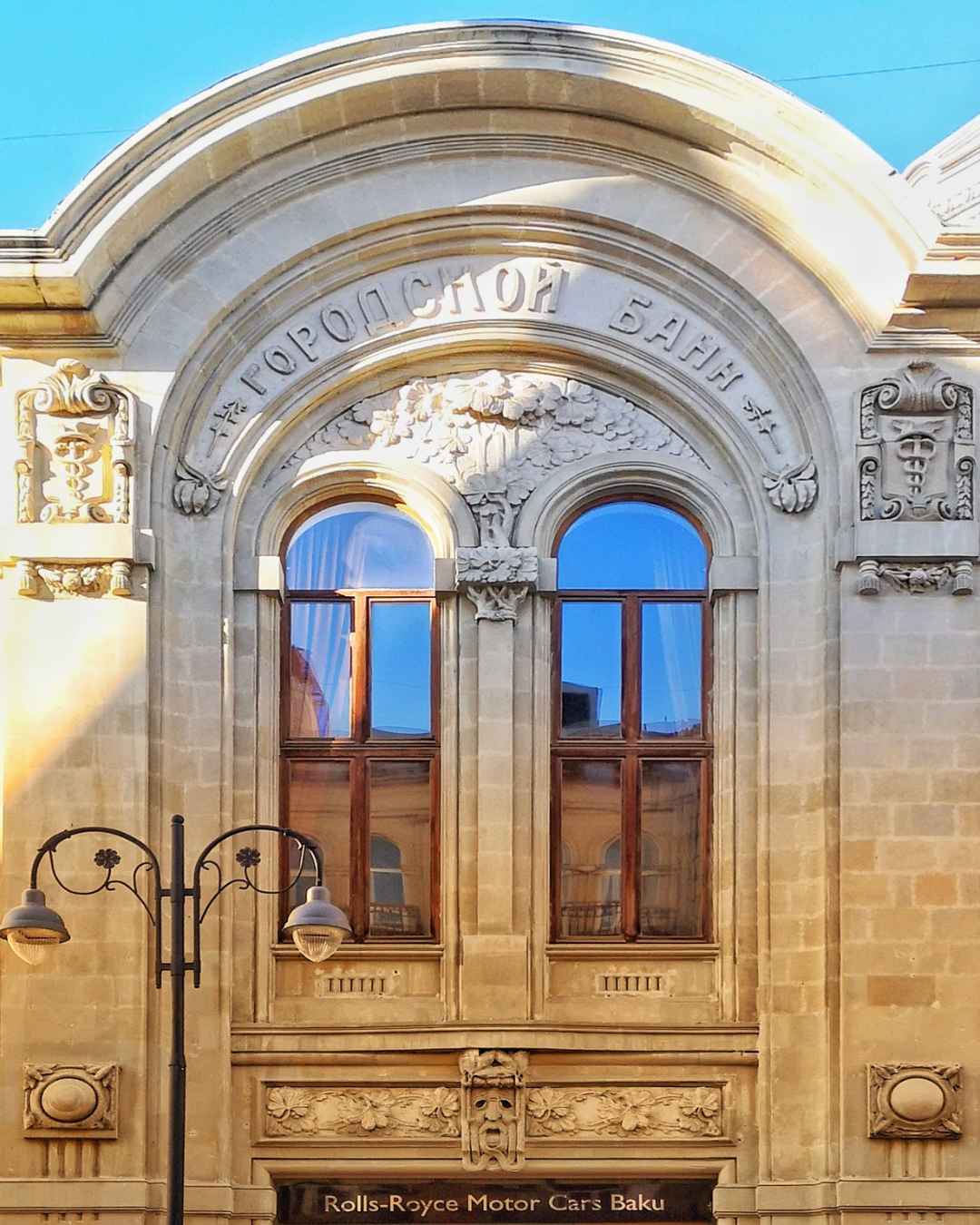
Art-Nouveau Landmarks in Baku
Rizvan Bayramov estimates that there are some 80 Art-Nouveau landmarks in Baku. Most of these landmarks are dwelling houses/mansions, a few public buildings such as schools, or administrative offices such as commercial banks. Meanwhile, there are countless private and public buildings with various the exteriors details adorned with Art-Nouveau style decorations.
Art-Nouveau Doors in Baku
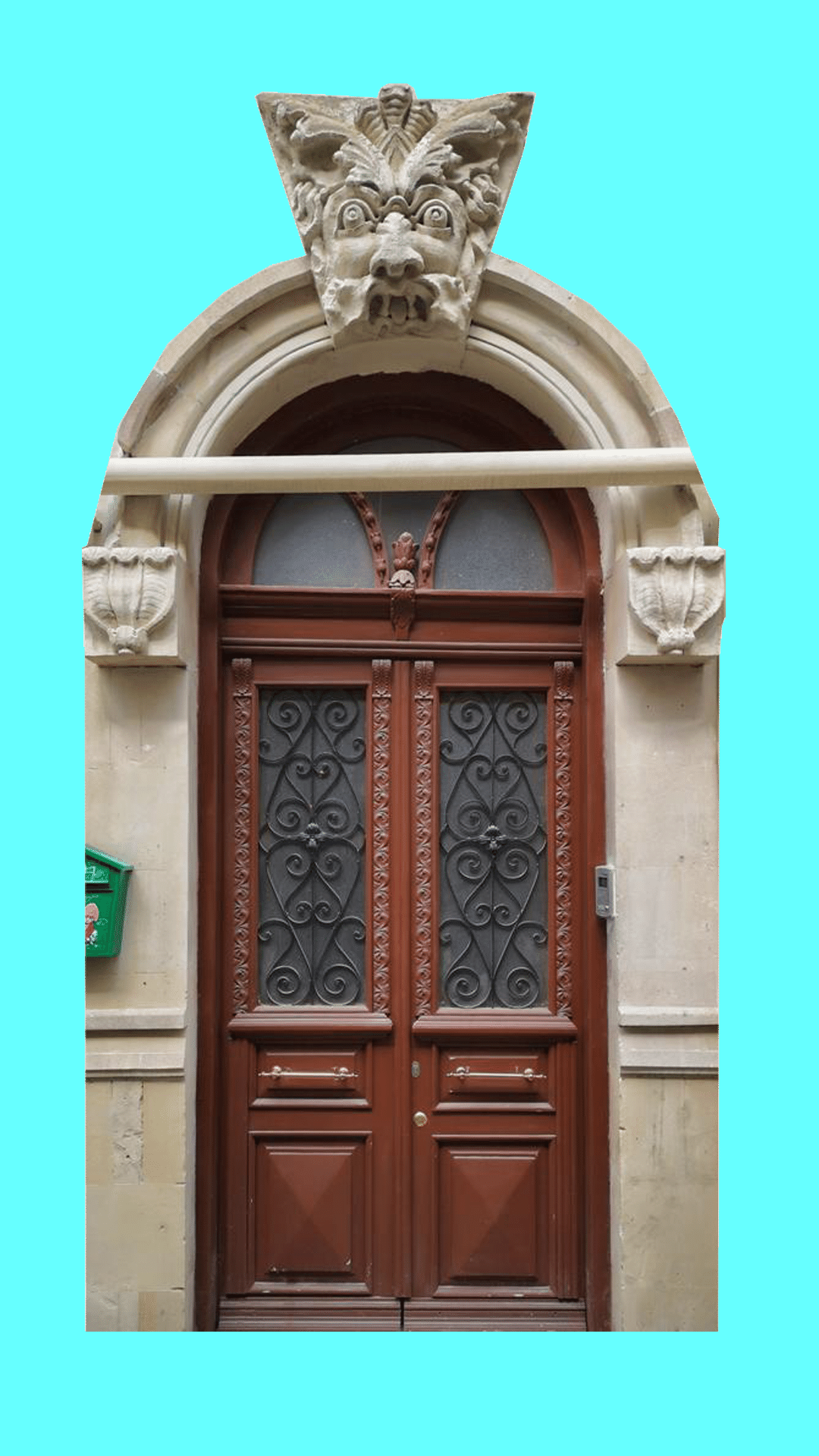
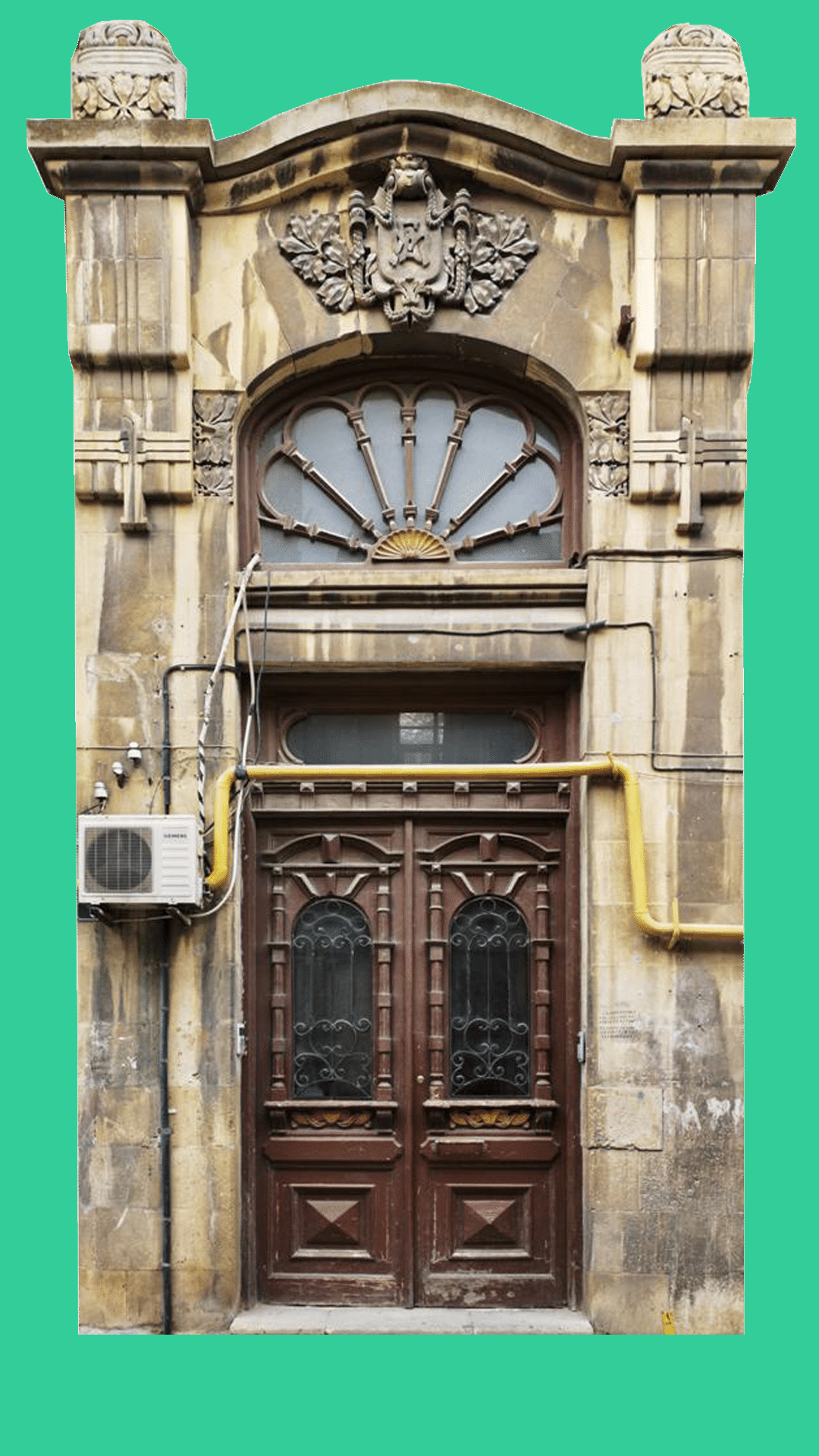
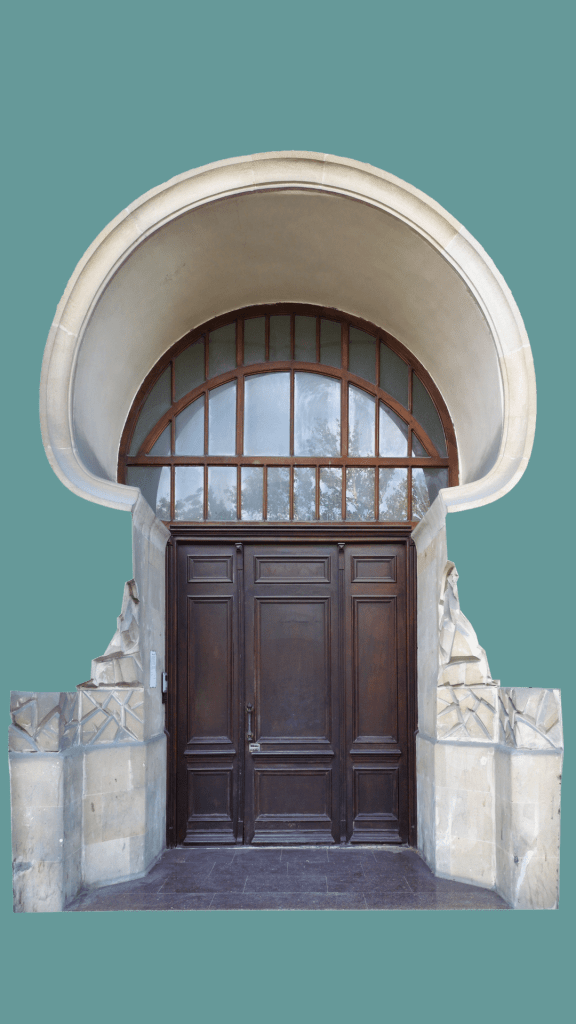
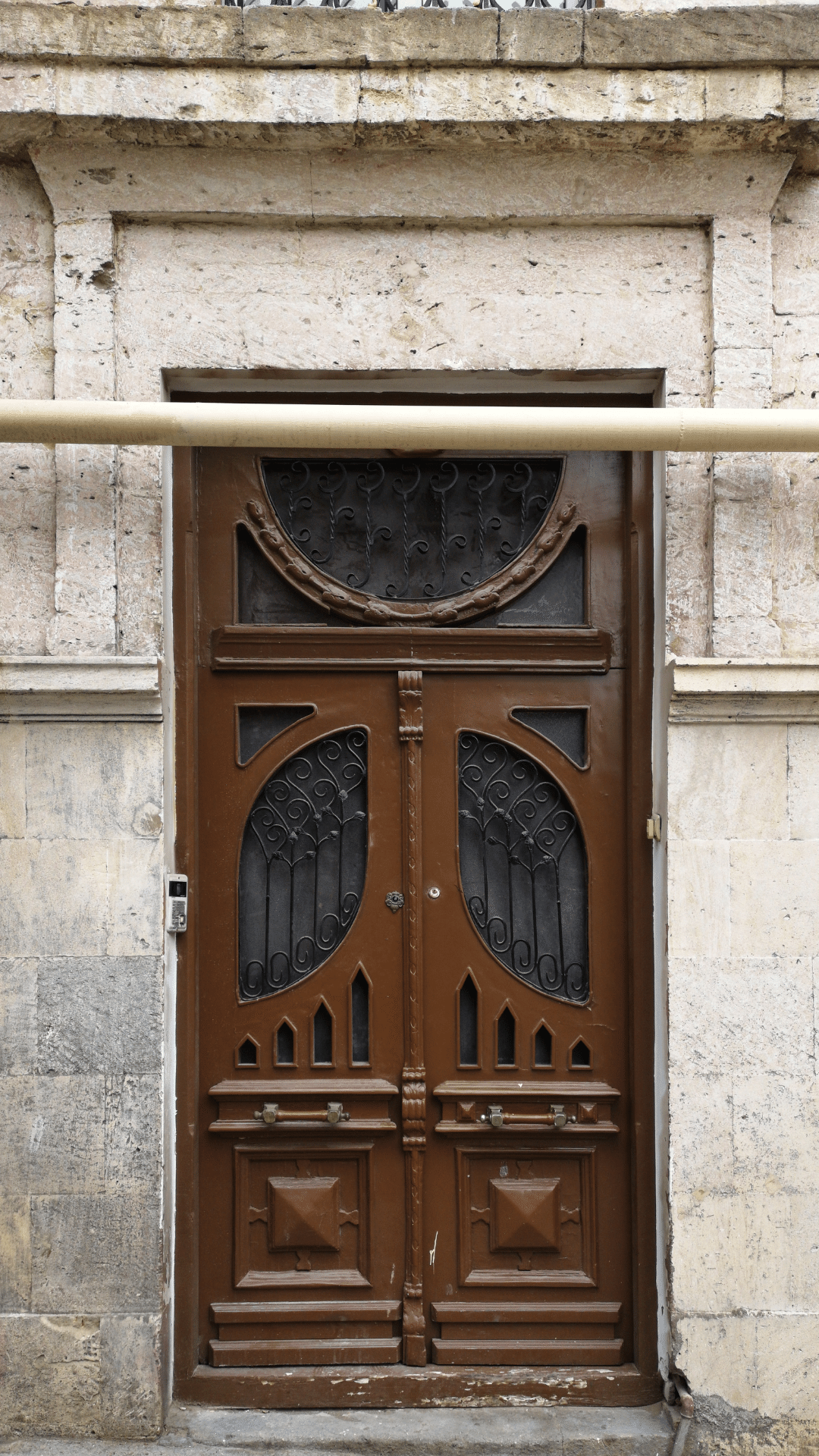
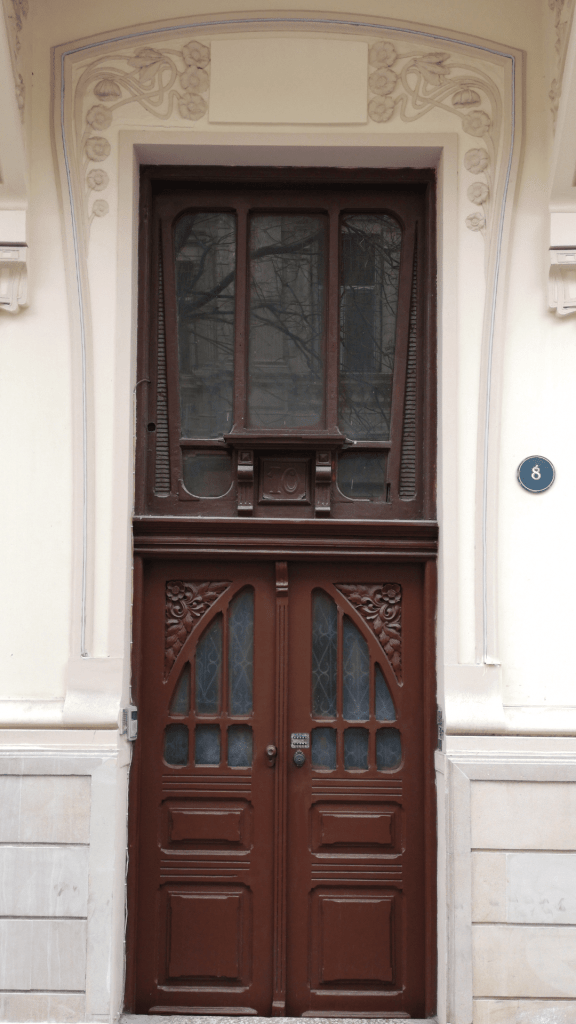
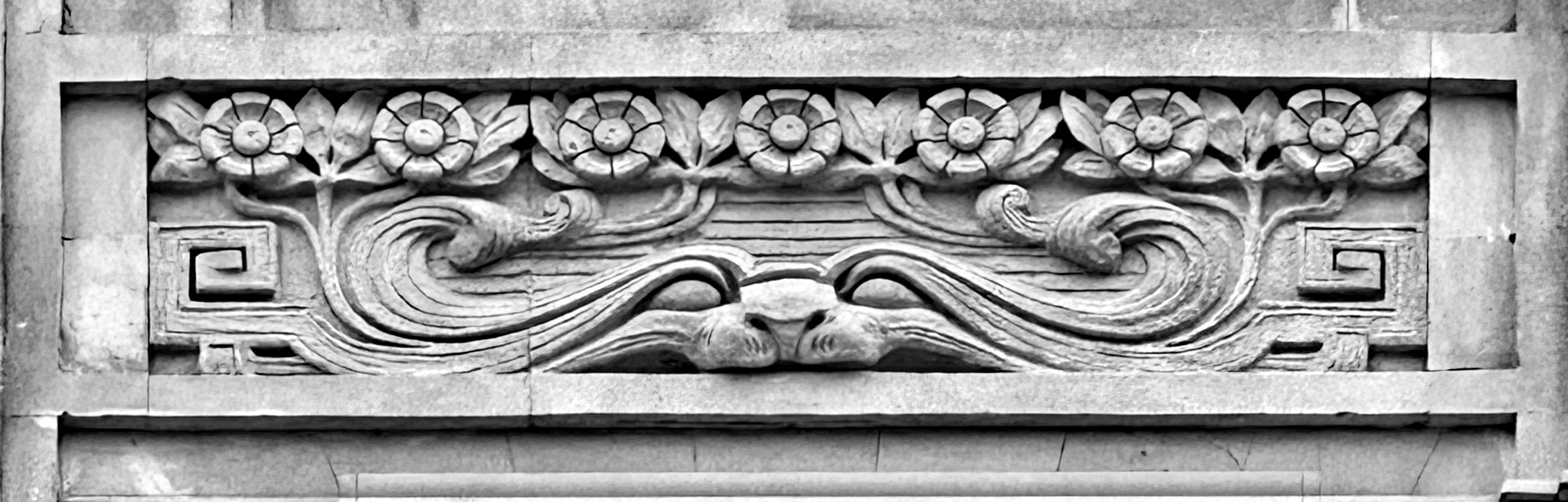
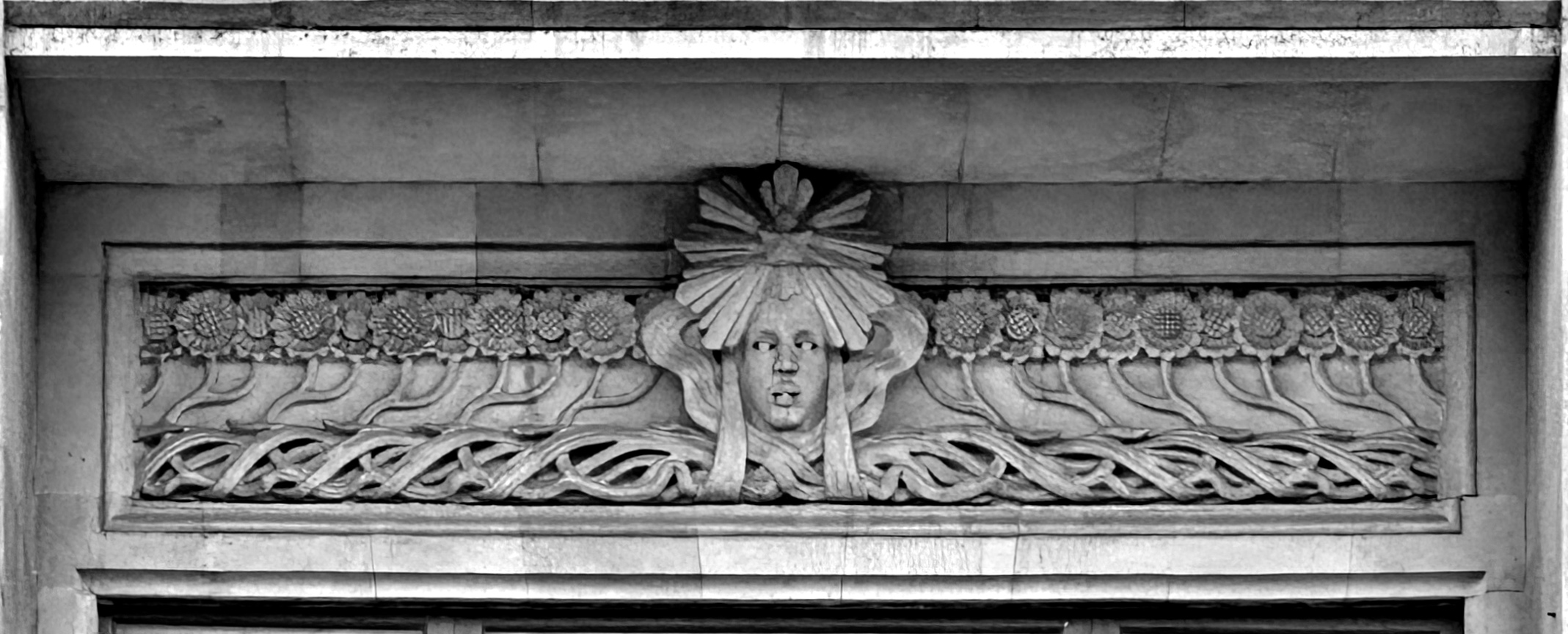
Art-Nouveau architecture in Baku distinguished with primarily on the facade in regard to the line of beauty such us floral motives in balcony gratings and coatings of windows and doors, and mascarons. The rejections of historicism are very clear with the absence of order style columns and triangular window pediments, or utilization of bricks and gypsum to create incredible plasticity of the corner solutions and immensely intricate decorations of whiplash lines and foliage details. Over time, the application of the distinctive ornamentations in interior design led the way up to this new architectural language in Baku.


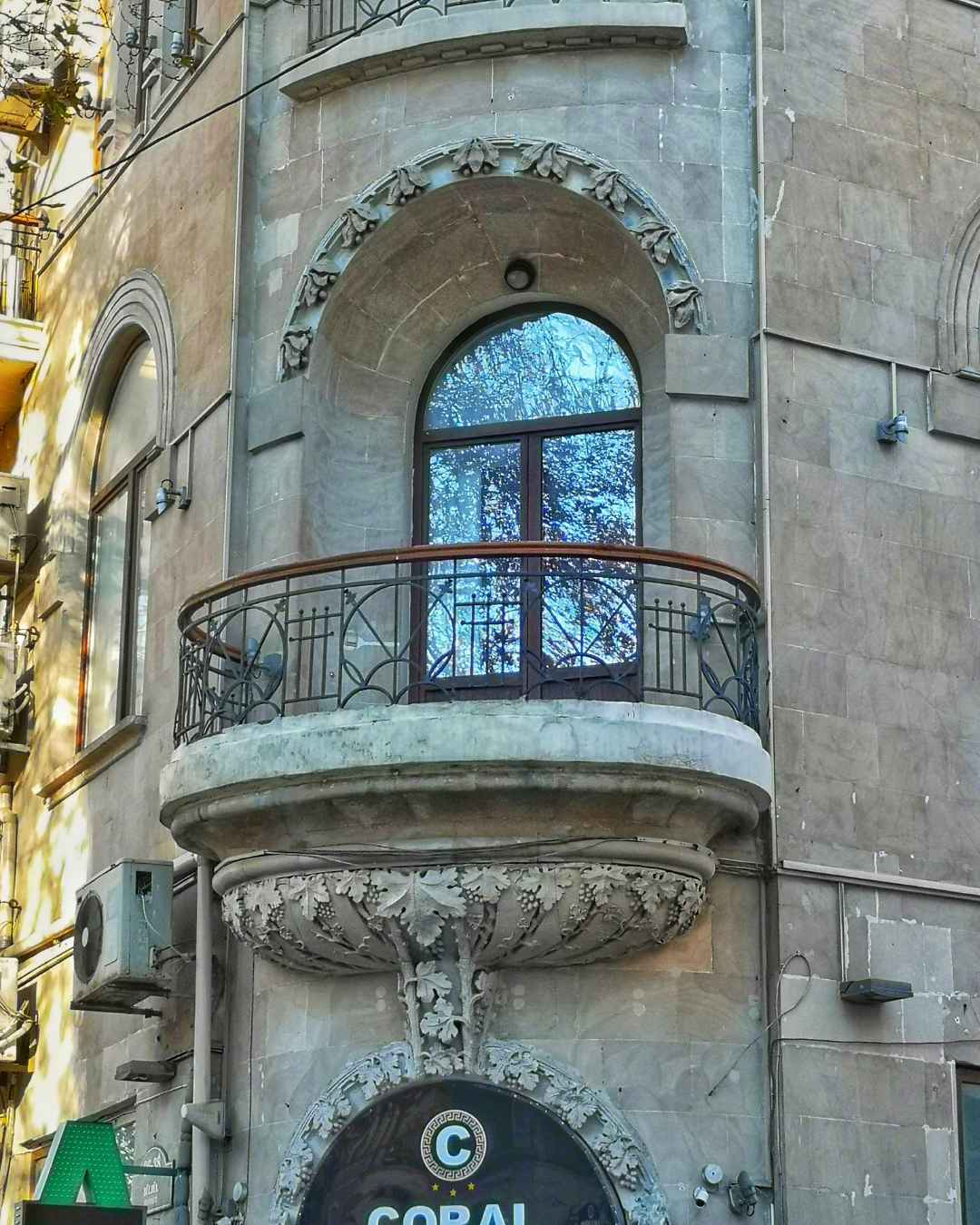
The architects who played a crucial role in introducing and adapting modern architecture to the local context in Baku are Nikolay Bayev (1875-1949), Józef Płoszko (1867—1931), Gabriel Ter-Mikelov (1874-1949), Misak Minayeviç Ter-Qriqoriyan, Nikolai Efimovich Marchenko and many others. We describe a few of these architects and their works below.
One of the prolific architects, who designed Art-Nouveau gems, was the polish Józef Plośko (1867-1931). He studied both at the Imperial Academy of Fine Arts and the Institute of Civil Engineering in Saint Petersburg. Quickly carved his niche in the city’s burgeoning architectural landscape, he even served as the city’s chief architect during 1907-1910.
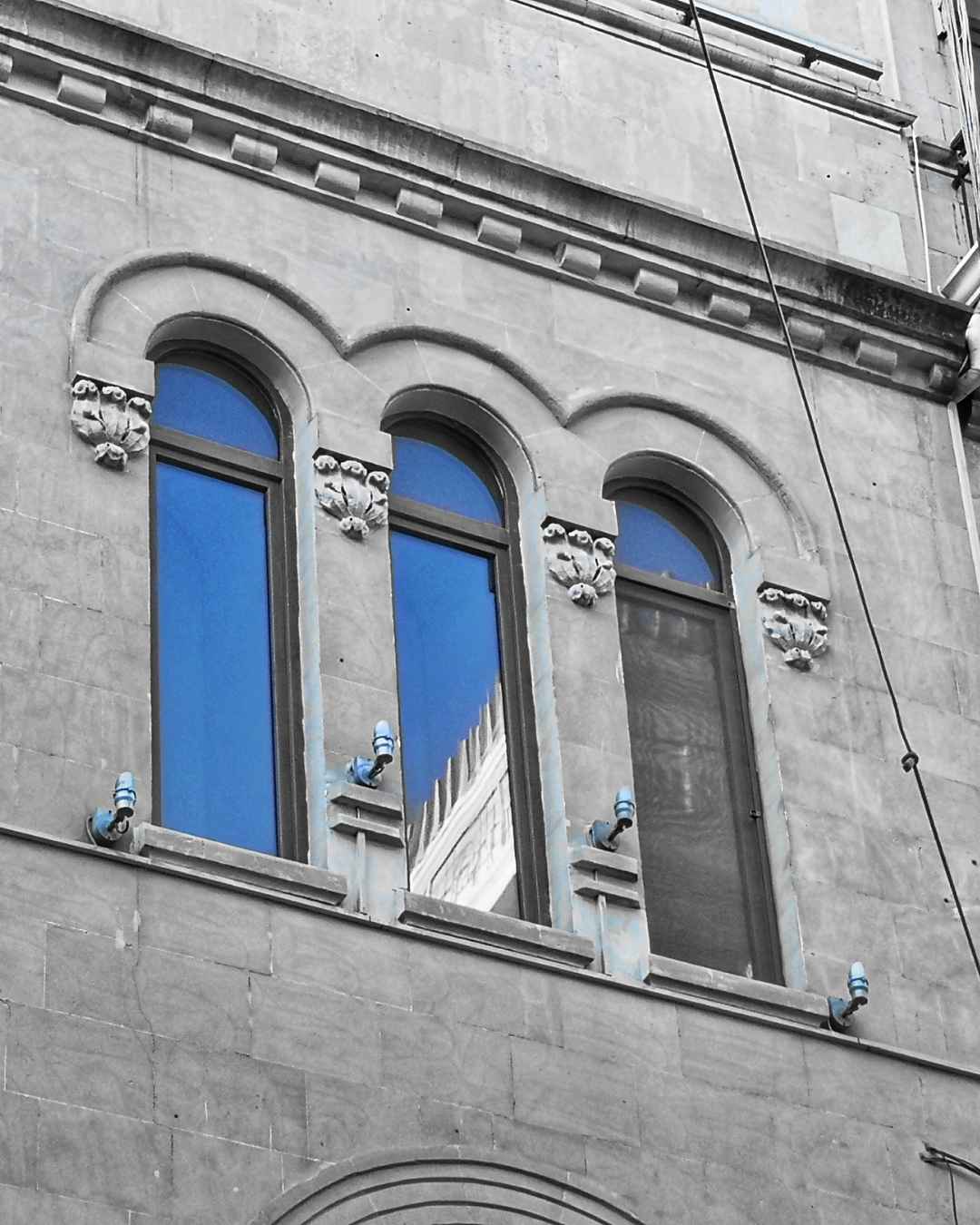
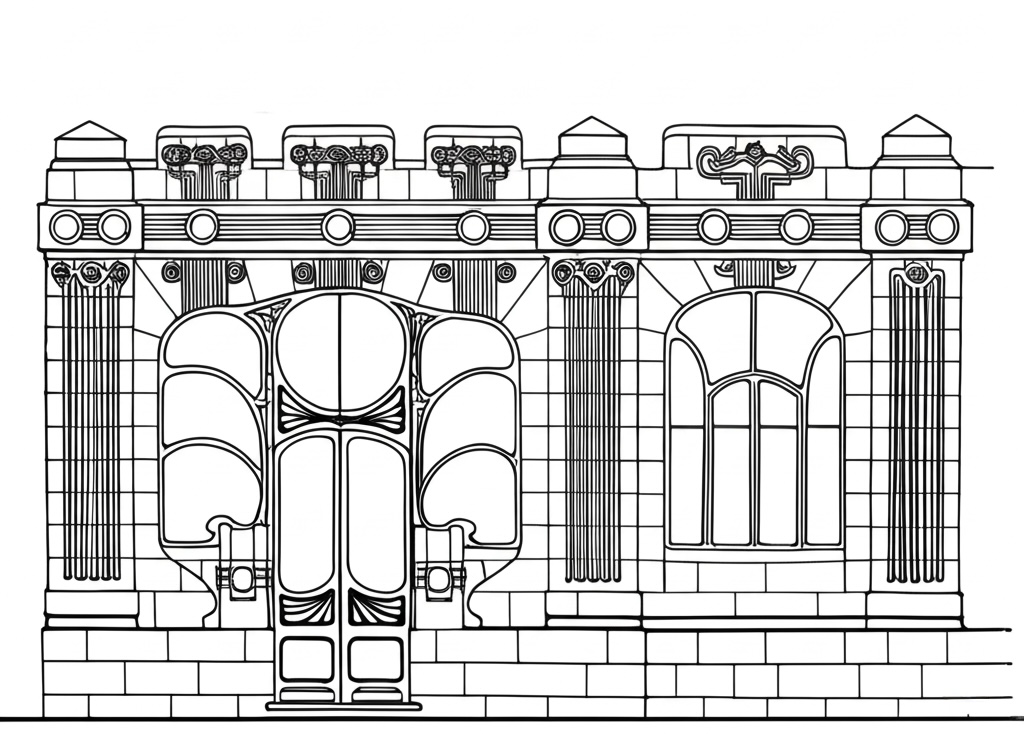
Józef Plośko’s designs ,infused with the elegance and dynamism of the new style, has contributed to shape Baku’s distinctive Art Nouveau character. One of his archival design projects, though has never been realized, proves the aspiration towards Art Nouveau design through its distinct sinuous lines, rhythmic window and main entry/door arrangements.
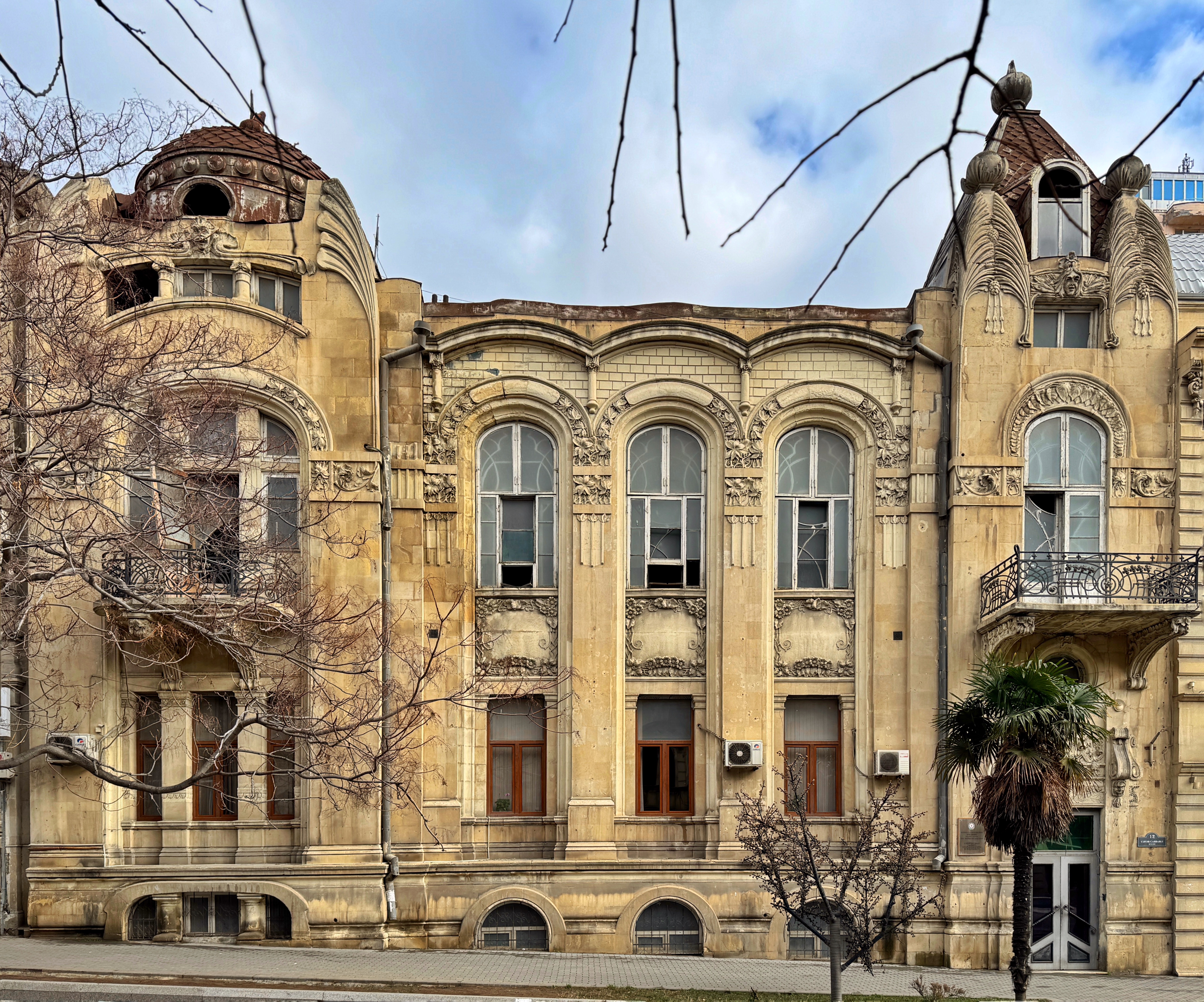


According to Shamil Fatullayev, the mansion commissioned by Kerbelayi Israfil Hajiyev and designed by Józef Plośko is ‘an anthem to Baku’s modern [Art-Nouveau) architecture’. Hajiyev’s Mansion “distinguishes the Baku modernism [Art Nouveau] from the Moscow or St. Petersburg modernism [Art Nouveau] with concrete or plaster stucco. Equally expressive are the interiors with front marble stairs, delicate lines of cornices, ceiling lamps and stained glass windows on the doors.” Plośko has expressed all the Art-Nouveau features asymmetrically through wings and central body of Hajiyev’s mansion.
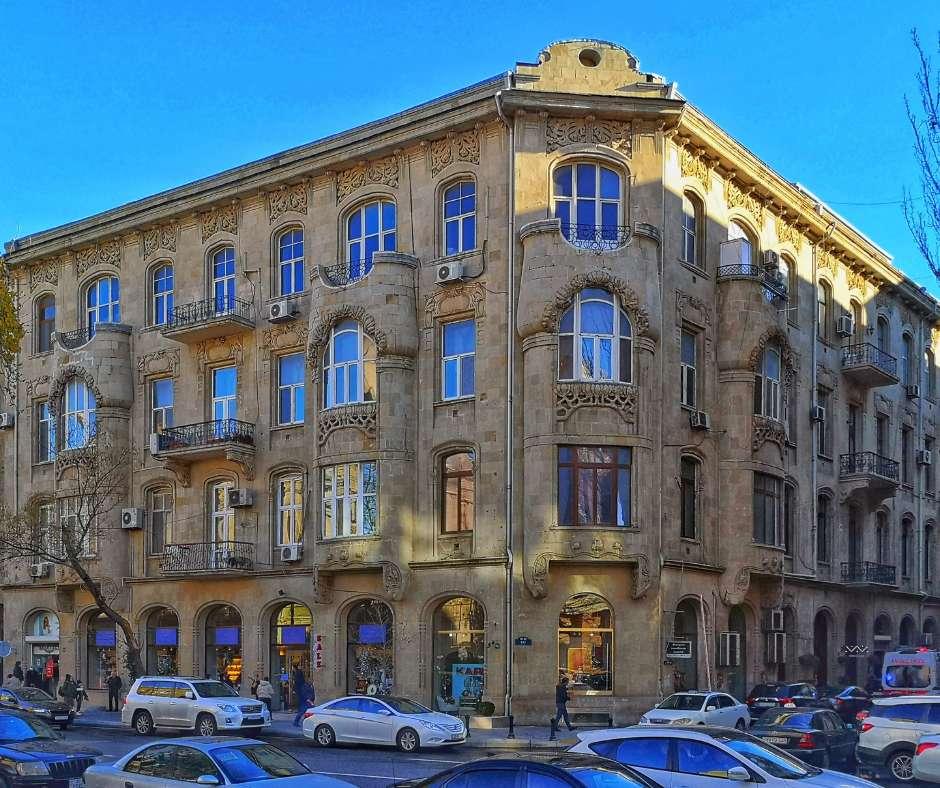
Musa Naghiyev (Memories of Baku, pp-34-39), one of the wealthiest oil barons of Baku, has owned several profitable real estates. Musa Naghiyev and Józef Plośko made a great duo in exploration of various Art-Nouveau designs in Baku. The three profitable real estates commissioned by Musa Nagiyev and designed by Józef Plośko in 28 May Street 4, 6, 10.
Moreover, two more residential houses with distinctive art-nouveau windows, foliage decorations and designs built in Bashir Safaroglu street, just parallel to 28 May street in the north, form one of the joyful Art-nouveau neighbourhoods in Baku.
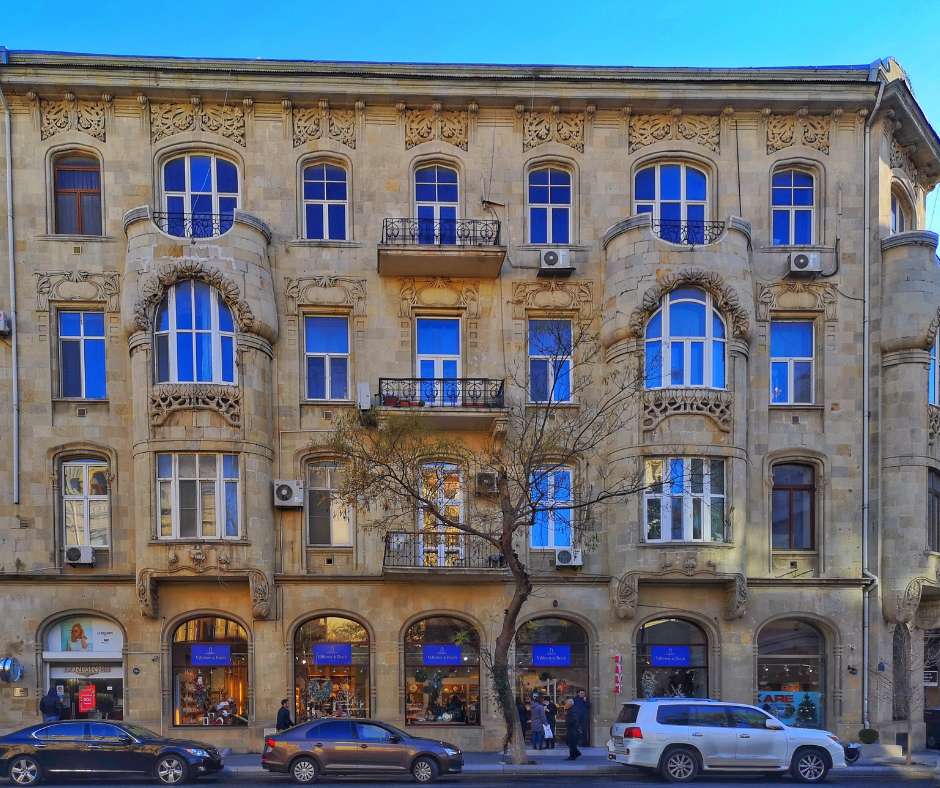
The facade of the profitable houses in 28 May street 4 and 6 is adorned with sinuous window frames, and captivating floral motifs. The central bay window, projecting outwards like a graceful bow, adds a touch of whimsy. The interplay of light and shadow across the intricately carved stonework creates a mesmerizing effect.
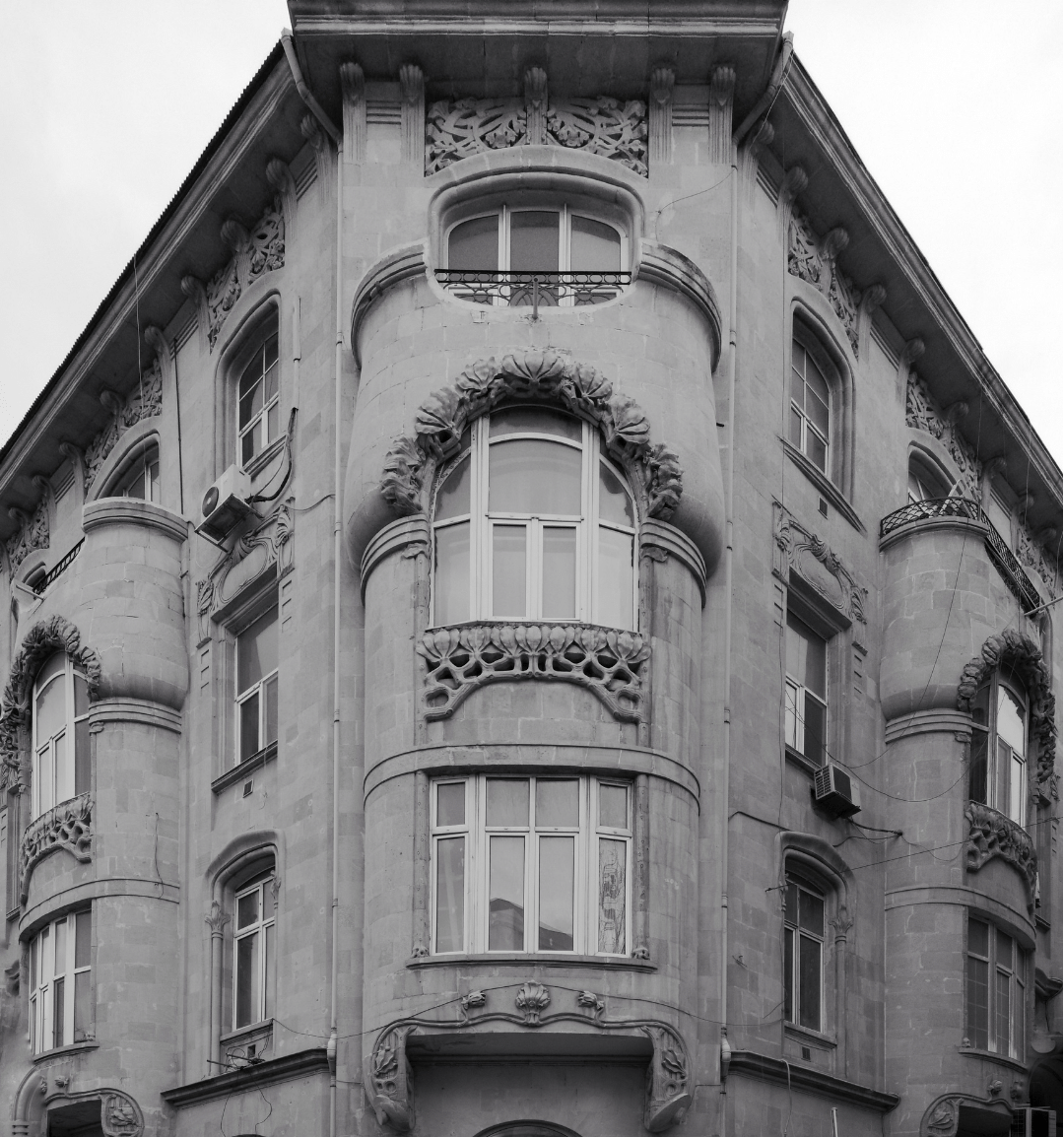
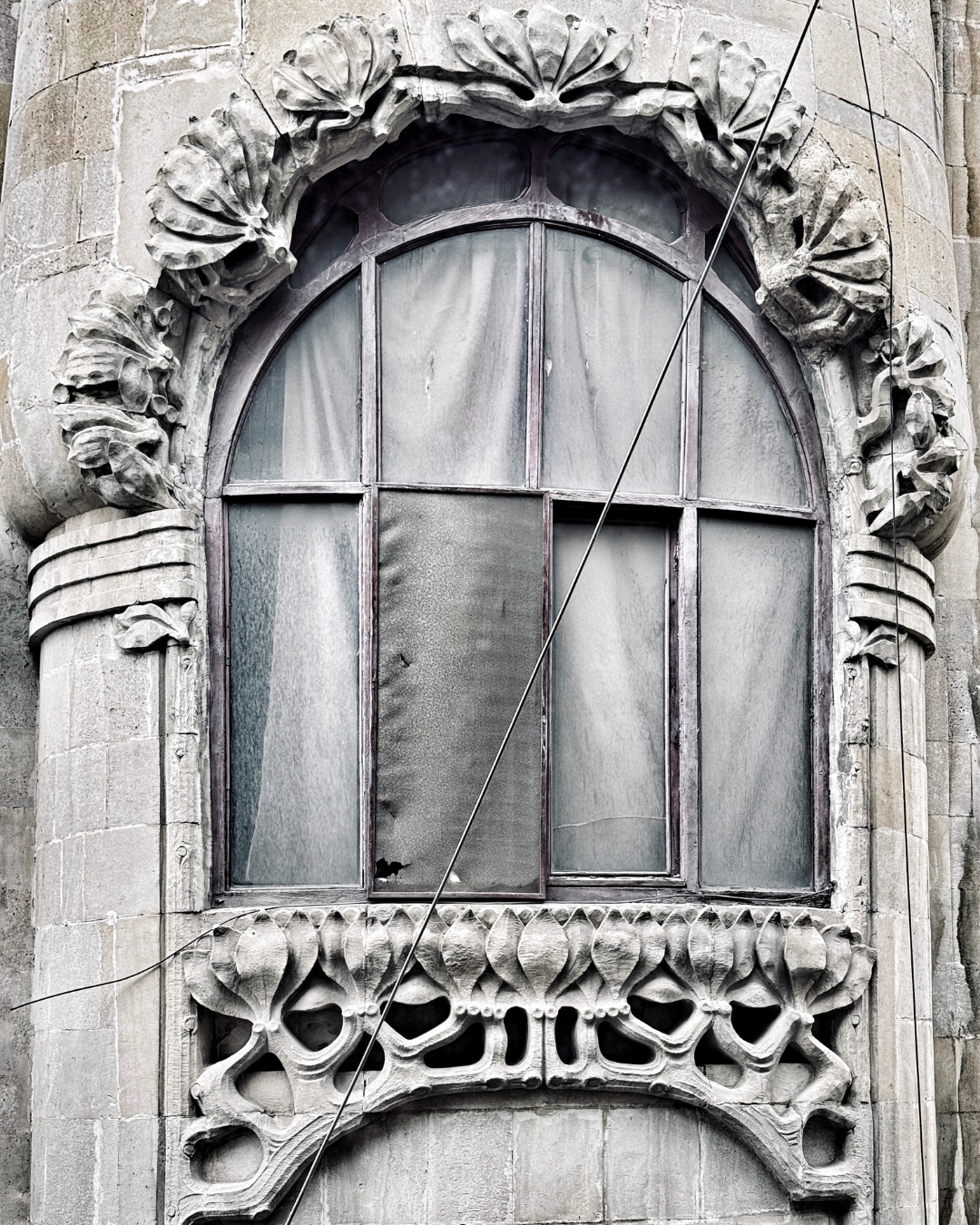
Another great Art-Nouveau designer was Nikolay Bayev (1885-1952). He landed a prestigious position as the chief architect of Baku from 1911 to 1918. His works are a showcase of true spirit of Art-Nouveau, distinct to Baku.
Bayev’s genius extended beyond mere external ornamentation. He seamlessly integrated Art Nouveau elements into the interiors of his buildings as well (i.e. the Opera and Ballet Theatre). Wrought iron railings, stained glass windows, and floral motifs found their way into foyers, staircases, and even individual apartments, creating a cohesive and aesthetically pleasing experience.
This period of Bayev serving as the City’s chief architect proved immensely fruitful, leaving an indelible mark on the city’s landscape. His architectural mastery shone through in the design of several iconic buildings.
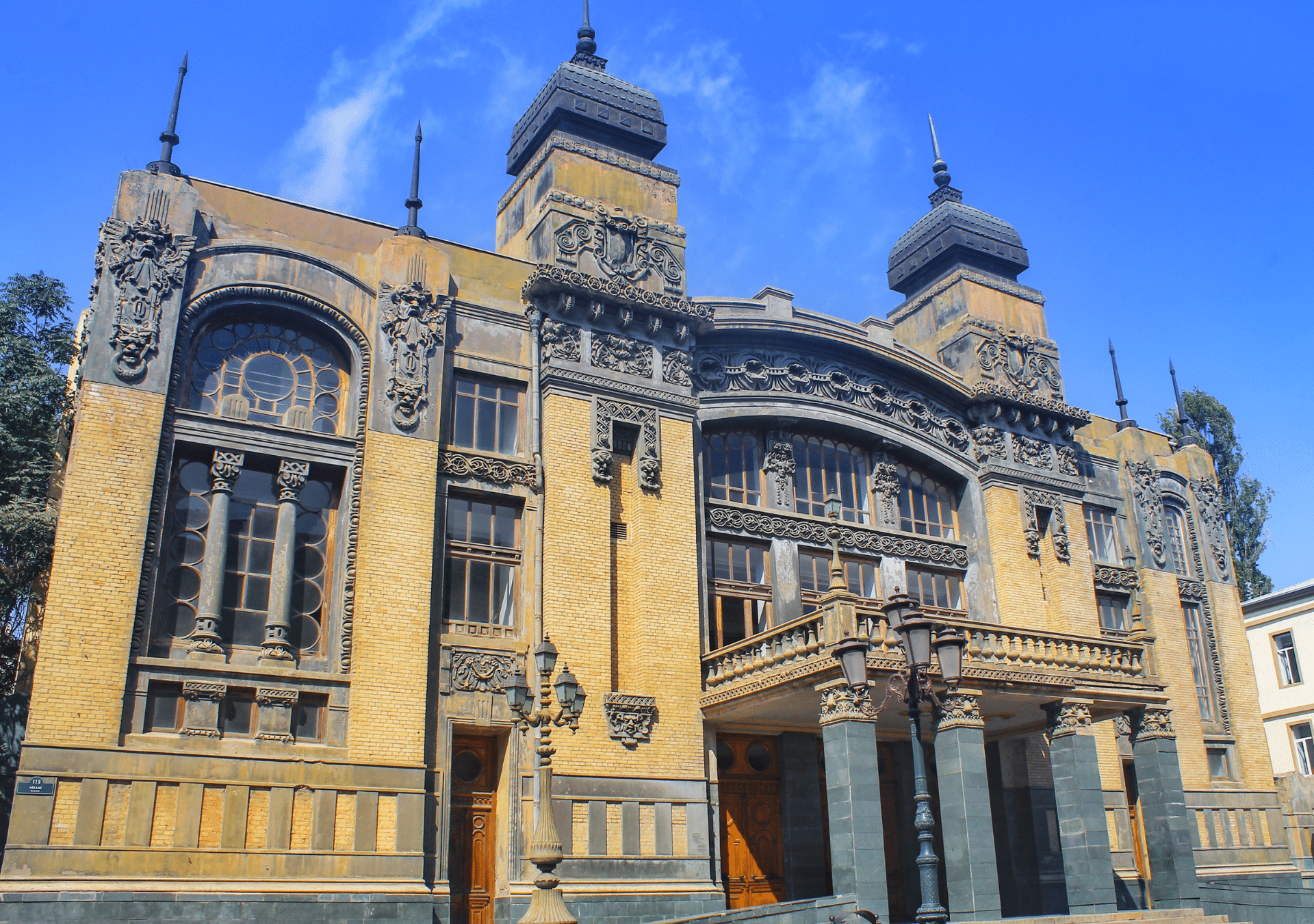
The Baku Opera and Ballet Theatre, designed by Nikolay Bayev, is a magnificent landmark and one of the most celebrated examples of Art Nouveau architecture in Baku. Built in 1911, the theatre stands as a testament to the city’s rich cultural heritage and artistic spirit as it continues to be a relevant cultural hub, constantly adapting and evolving to offer a diverse range of operas and ballets.
The interior of the Opera and Ballet Theatre
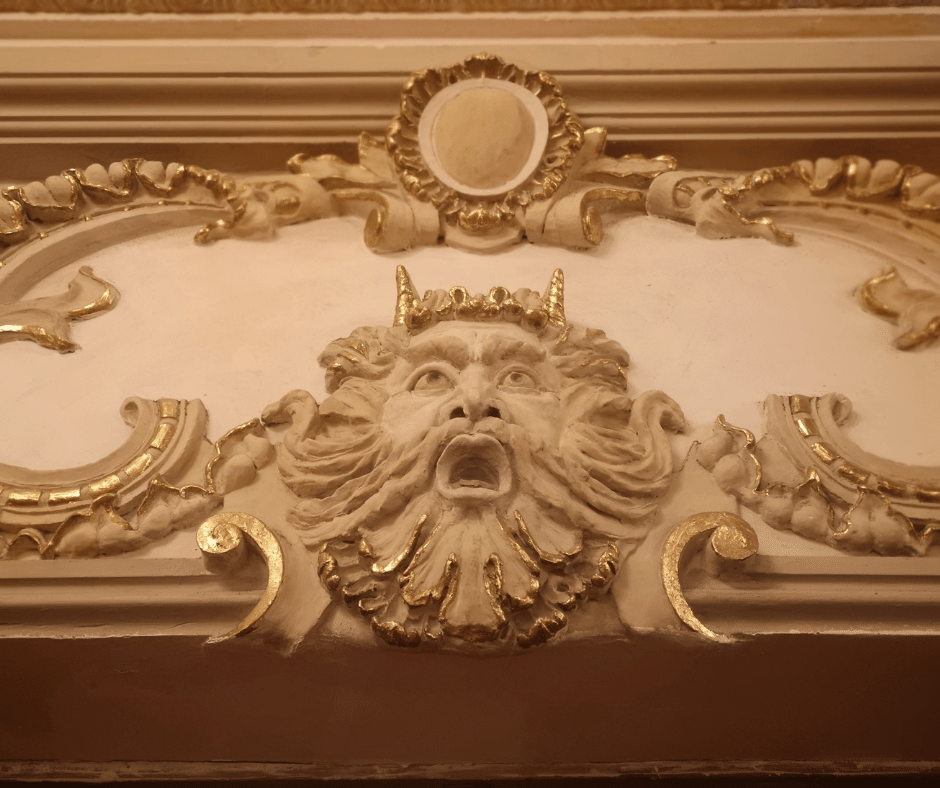

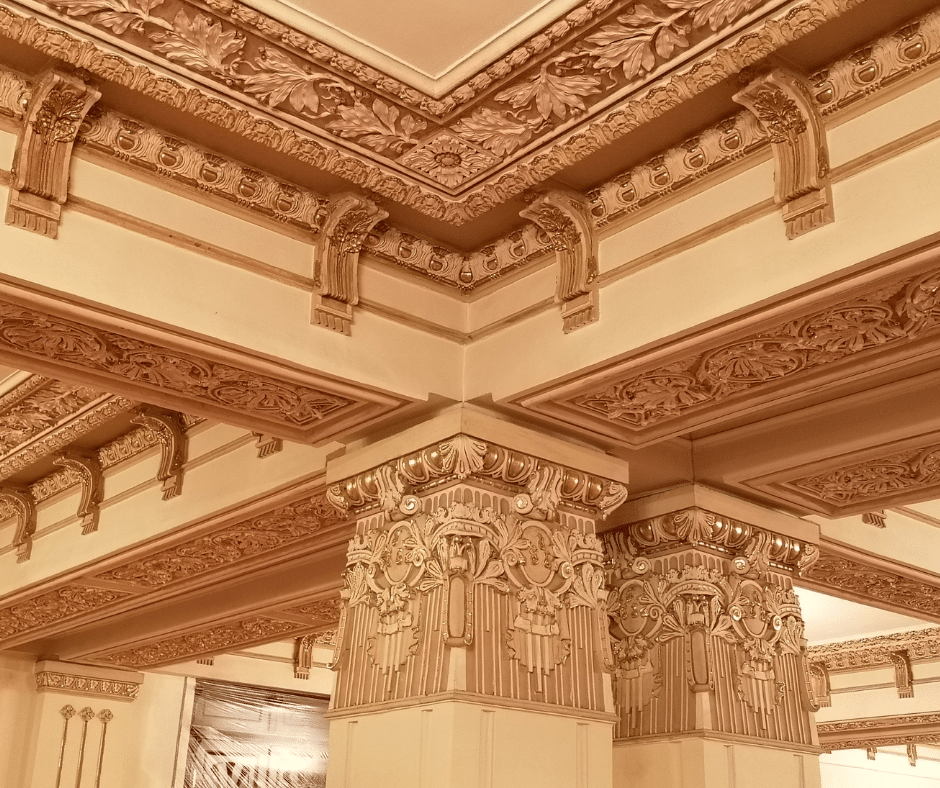

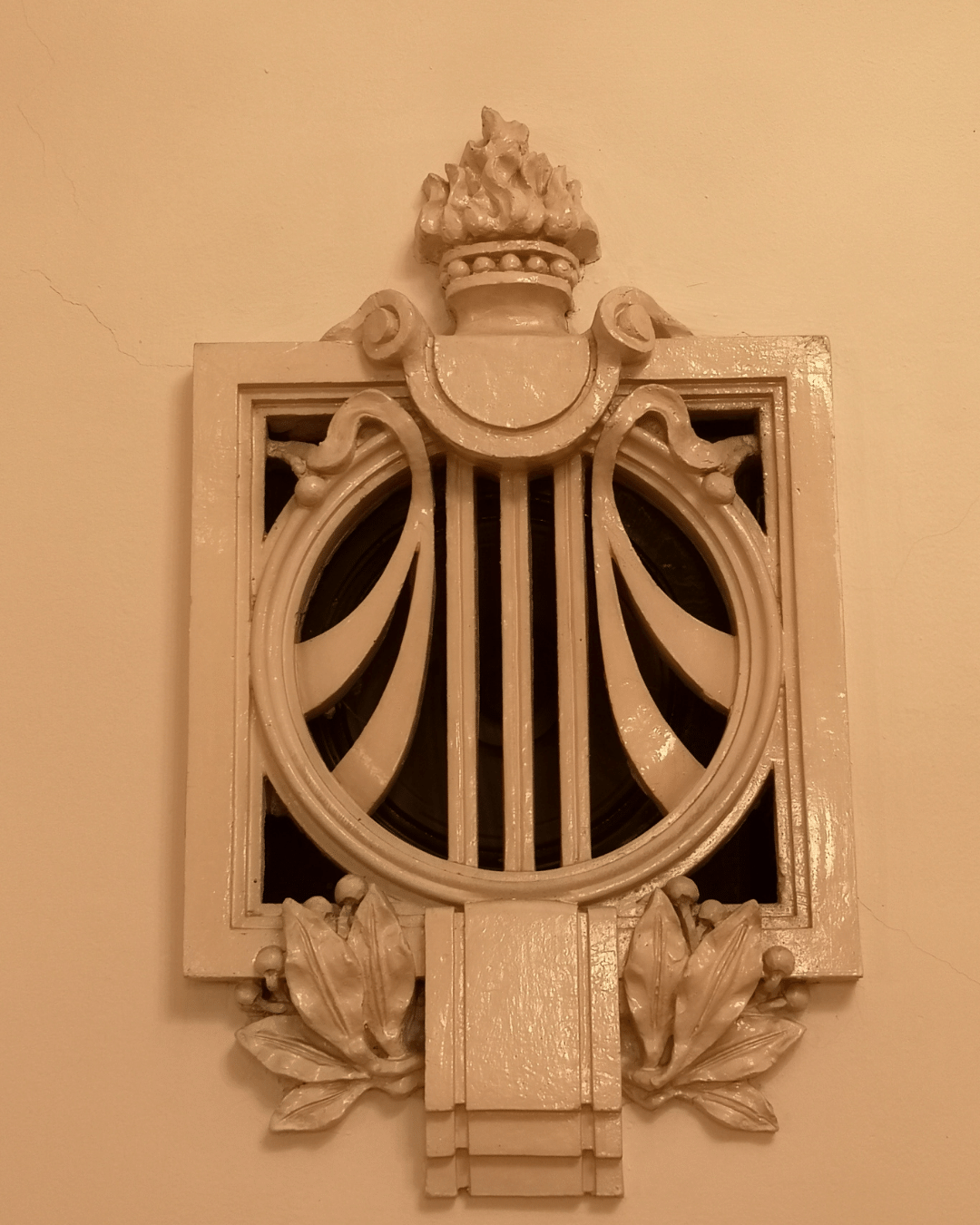
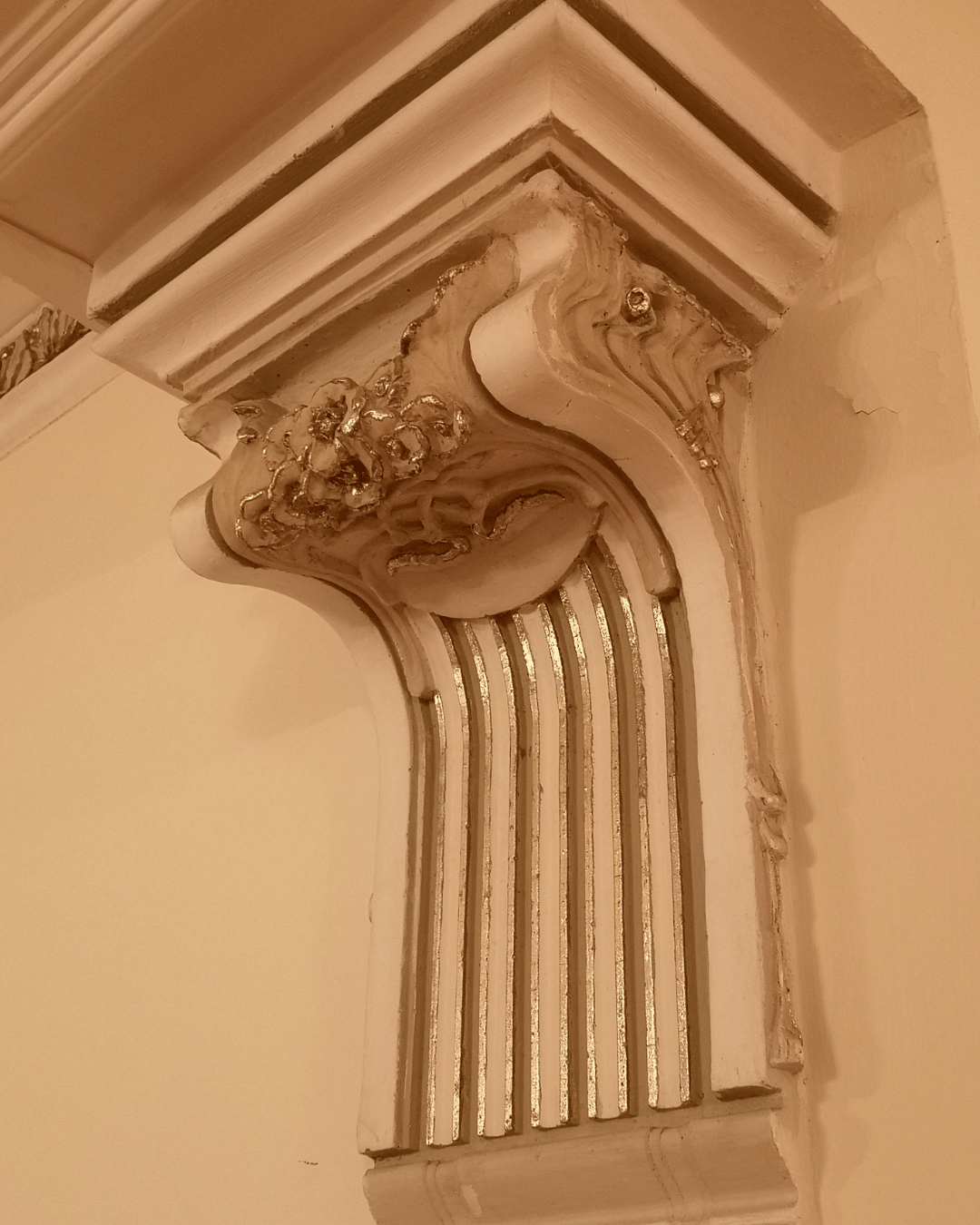

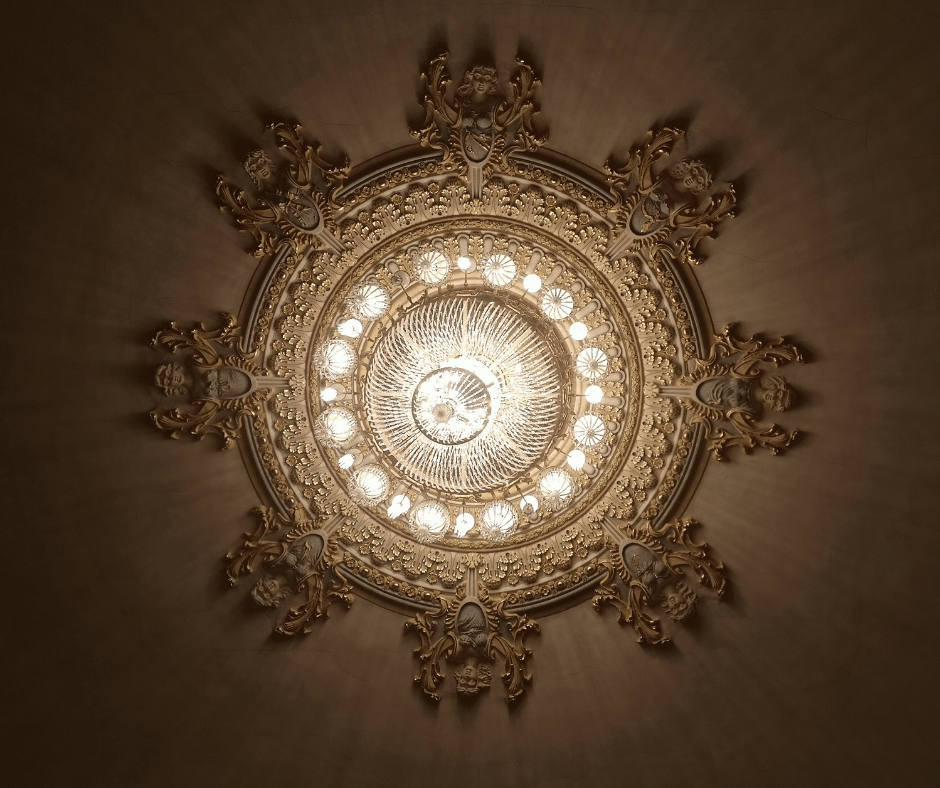
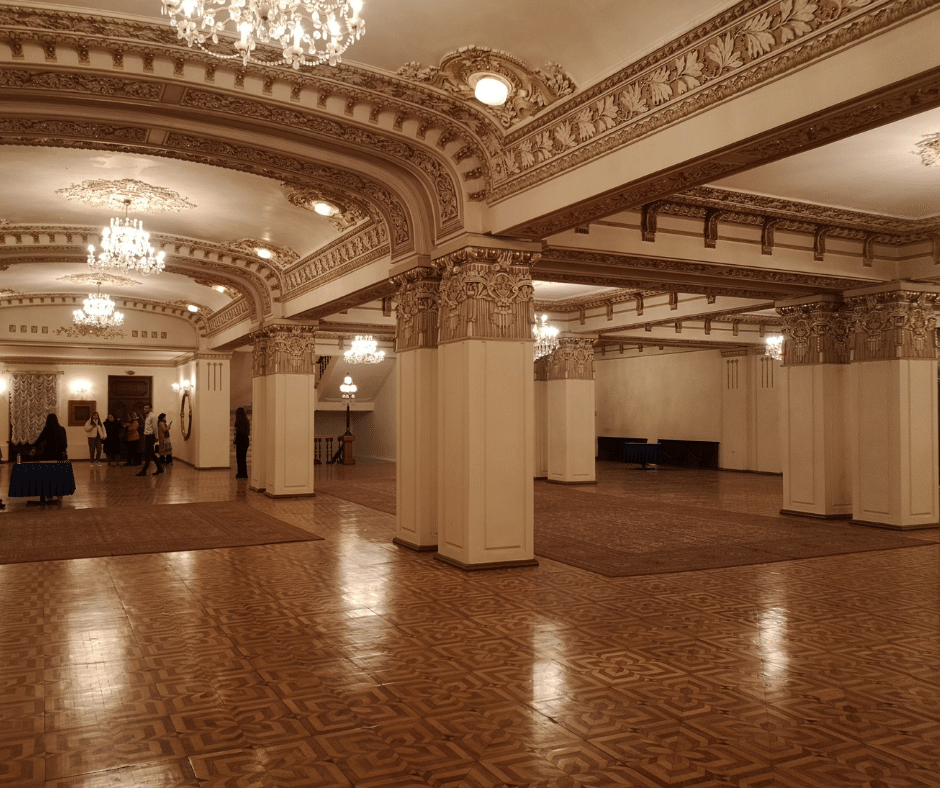
The theatre’s facade is a captivating display of Art-Nouveau’s signature elements, which is also enabled by use of the mix of stone, bricks, and glass materials. Swirling curves, floral motifs, and intricate geometric patterns are intertwined harmoniously with the elaborate carvings that are depicting mythical creatures and mascarons.
Stepping inside the theatre is like entering a world of opulent beauty. The auditorium, the stage that is framed by a proscenium arch are a masterpiece of design, with a richly decorated ceiling featuring chandeliers and frescos.
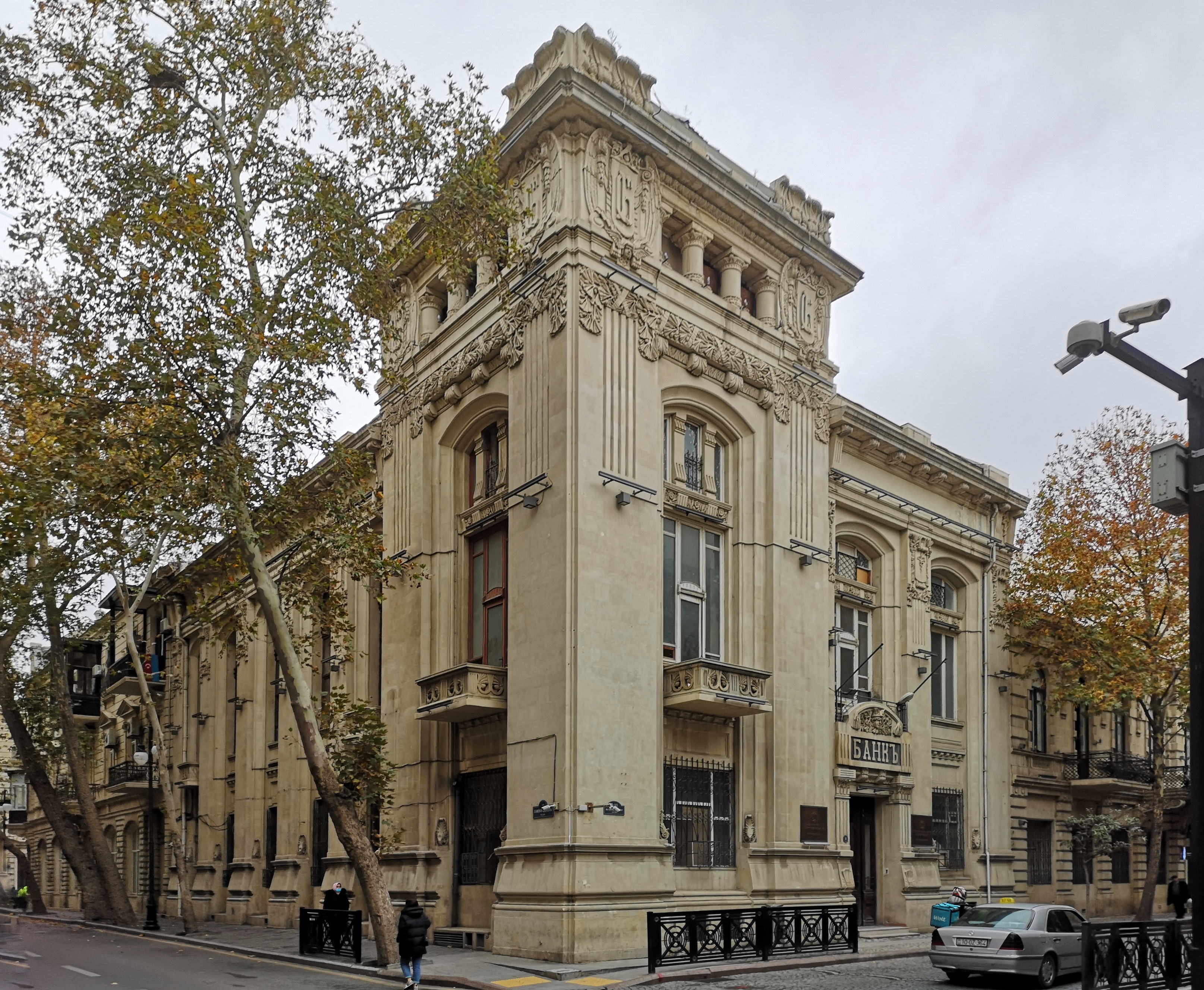
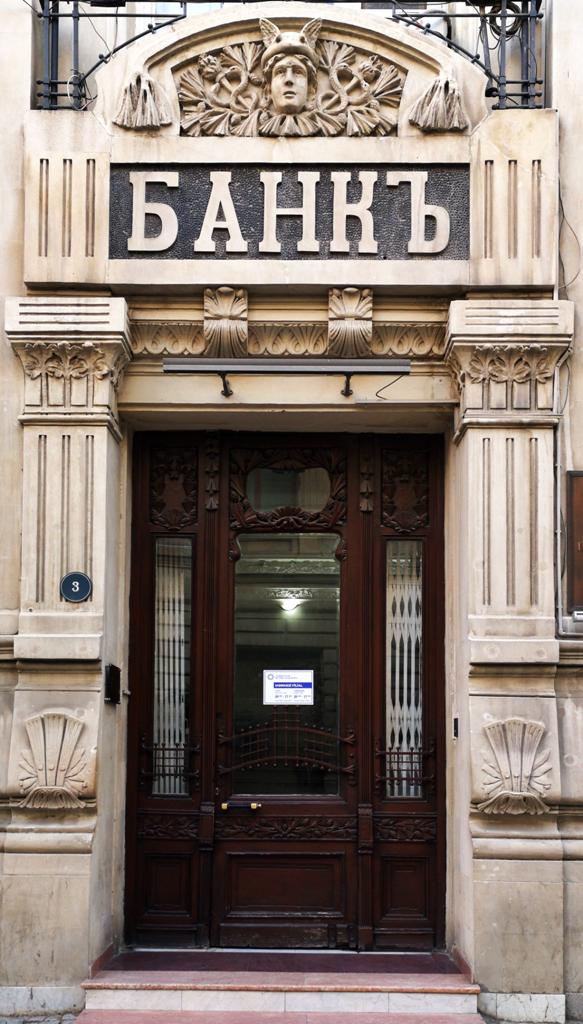
One of the prime example of the elegant Art-Nouveau style designed by Bayev is the building formerly known as the North Russian-Asian Bank. The building still serves as Bank office owned by Azerbaijan International Bank. Its facade, crafted from limestone, is adorned with intricate carvings relevant to its purpose of use as a commercial office i.e. mascaron of Greek God Hermes (the Roman Mercury) and the staff of Hermes, caduceus, as the symbol of trade.
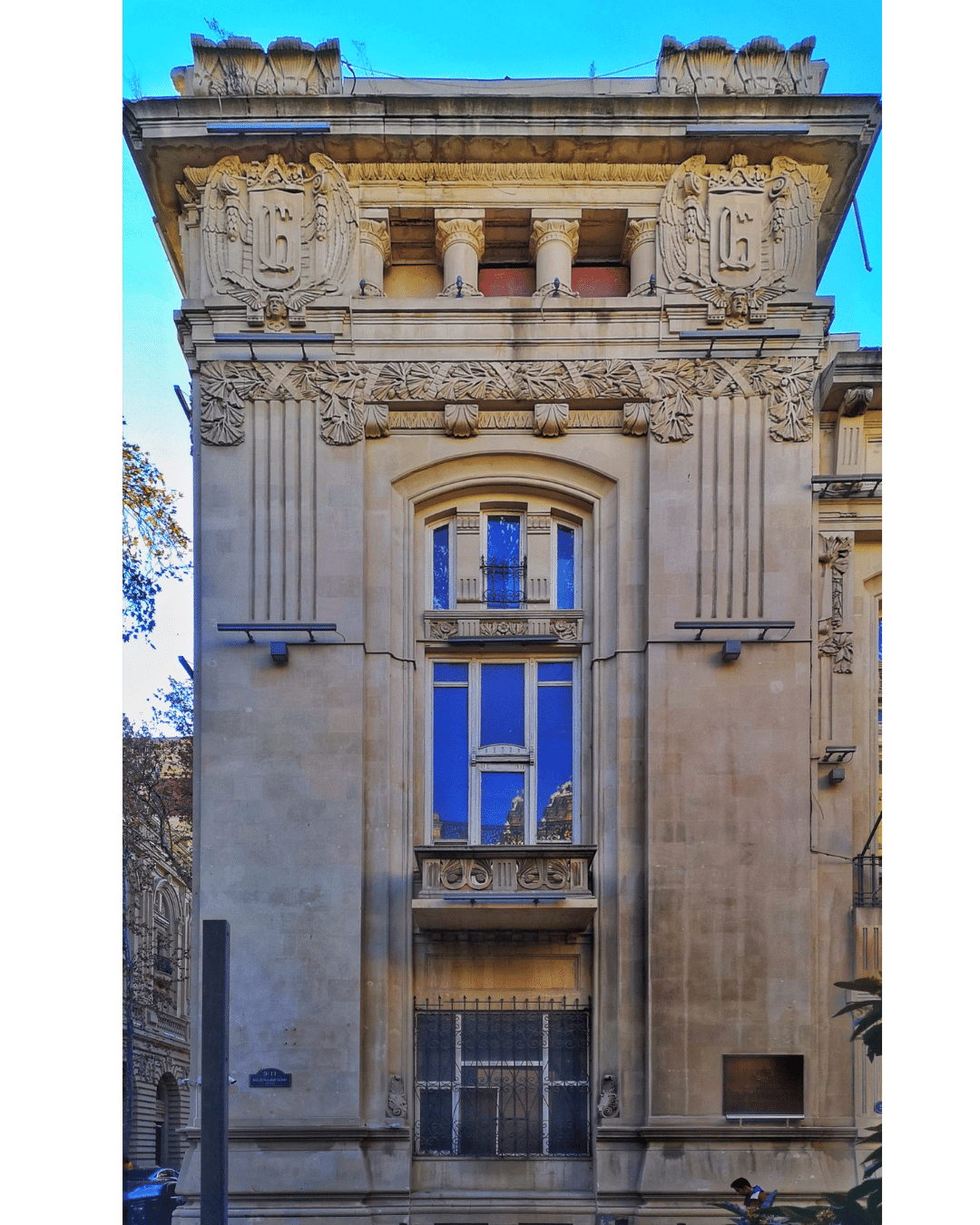
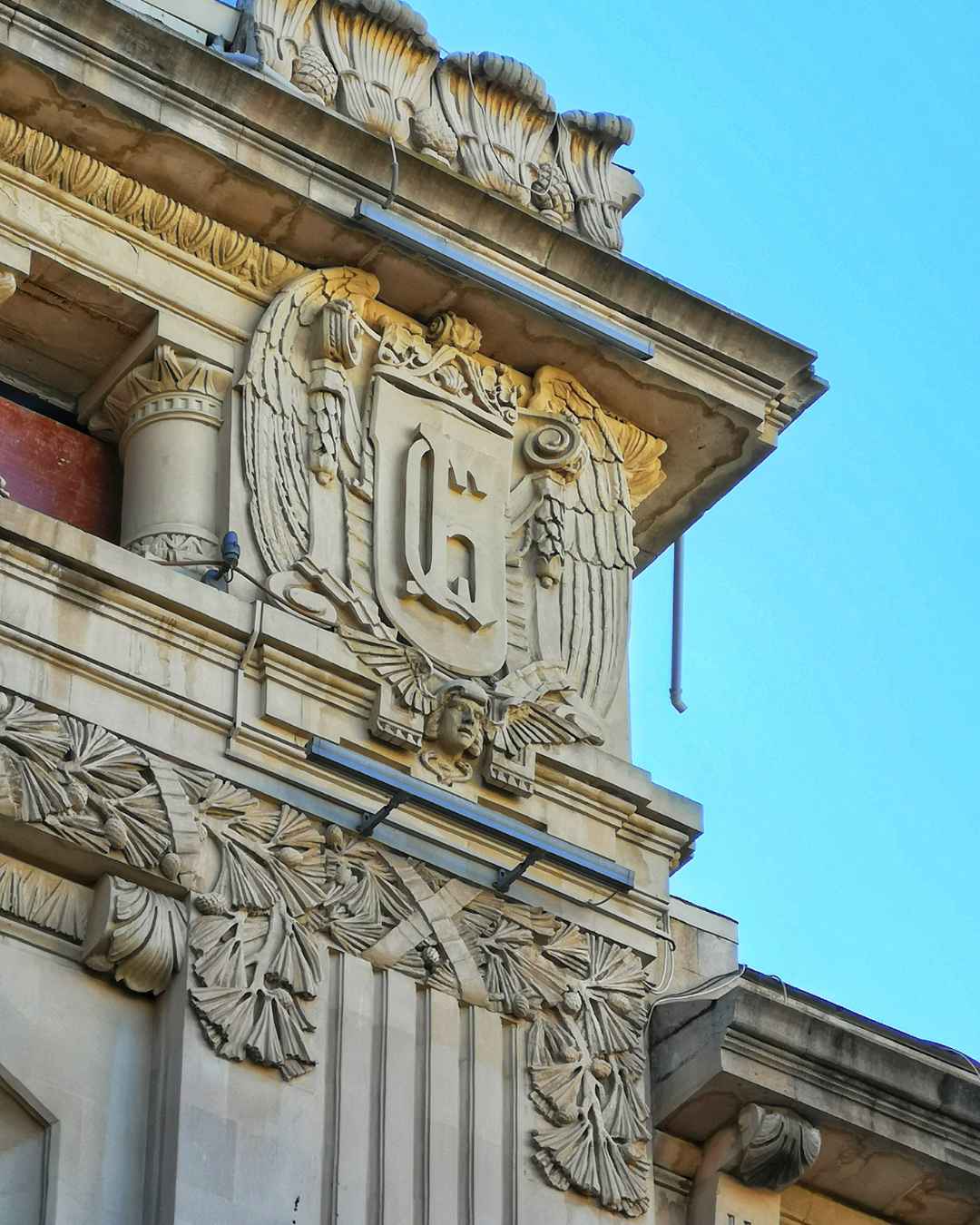
Bayev’s masterful blend of Art-Nouveau with local influences left an indelible mark on Baku’s architectural landscape. His art-nouveau designs continue to captivate observers as they are standing as testaments to his artistic vision and enduring legacy.
Conclusion
Baku’s Art-Nouveau architecture is not just a historical relic; it’s a vital part of the city’s identity. These buildings continue to captivate visitors with their unique blend of beauty and cultural significance. Today, they serve as a testament to the city’s past prosperity and artistic ingenuity, reminding us of a time when Baku embraced modernity while staying true to its roots.
P.S. Reach out to me for the map of the Art-Nouveau Landmarks pinned on Google Maps
Related Posts You Might Enjoy:
- Doors of Baku
- Mascarons as the manifestation of Art-Nouveau Architecture in Baku
- Top 10 Modern Mugham Jazz Fusions
Written by: Gani Nasirov
City Guide | Writer | Urban Explorer
www.ganinasirov.com
 urban architecture blog by genii
